


Food Chain: Introduction
A food chain describes the flow of energy and nutrients from one organism to another within an ecosystem. It typically starts with a producer organism and ends with a decomposer organism, outlining a linear path of energy transfer.
What is a Food Chain?
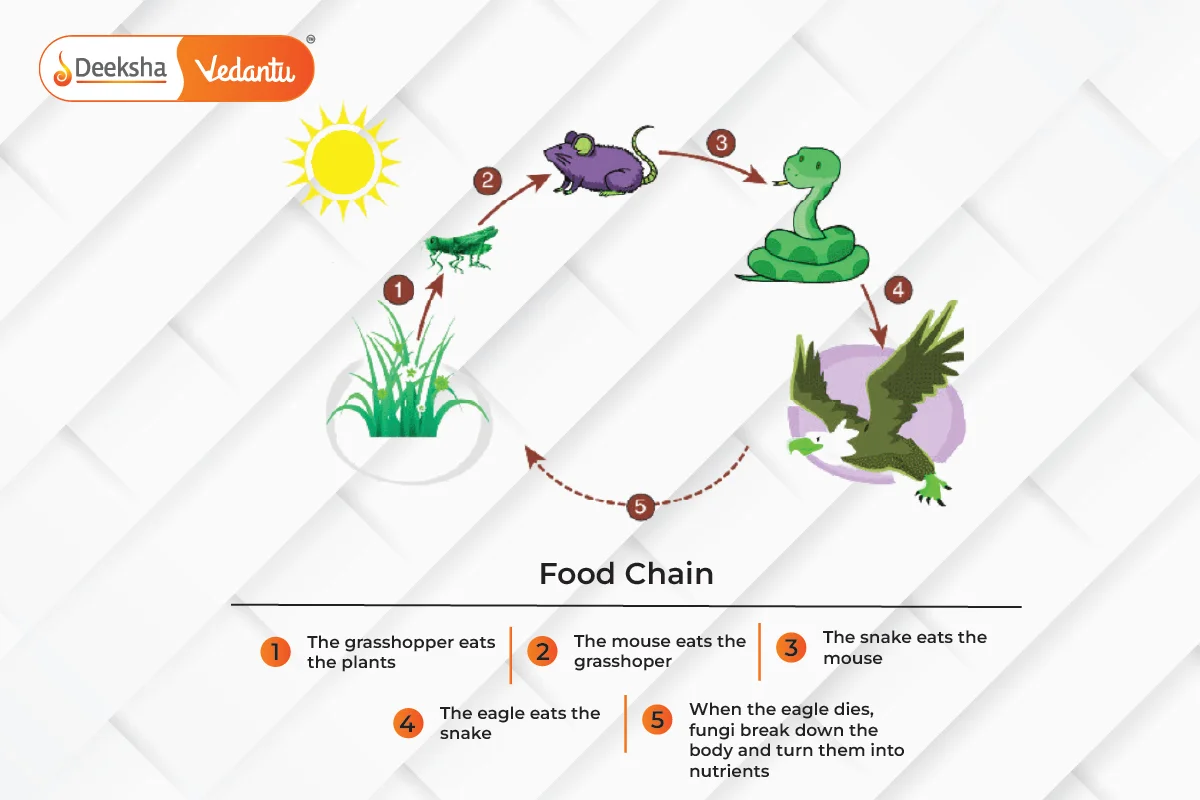
A food chain is a sequence that demonstrates how organisms are interdependent on each other for food. It starts with producers at the base, followed by various levels of consumers, and ends with decomposers. This linear model helps in understanding the relationship and energy flow between different organisms in an ecosystem.
Components of a Food Chain
- The Sun:
- The primary source of energy for all life on Earth.
- Producers:
- These include all autotrophs like plants and algae, which use sunlight to produce food through photosynthesis.
- Consumers:
- Organisms that rely on other organisms for food. This category includes:
- Herbivores (Primary Consumers): Animals that eat plants.
- Carnivores (Secondary and Tertiary Consumers): Animals that eat other animals.
- Omnivores: Animals that consume both plants and animals.
- Scavengers: Animals that consume dead organisms.
- Parasites: Organisms that live on or in a host organism and cause harm.
- Organisms that rely on other organisms for food. This category includes:
- Decomposers:
- Organisms like bacteria and fungi that break down dead organic matter, returning nutrients to the environment and completing the cycle.
Food Web
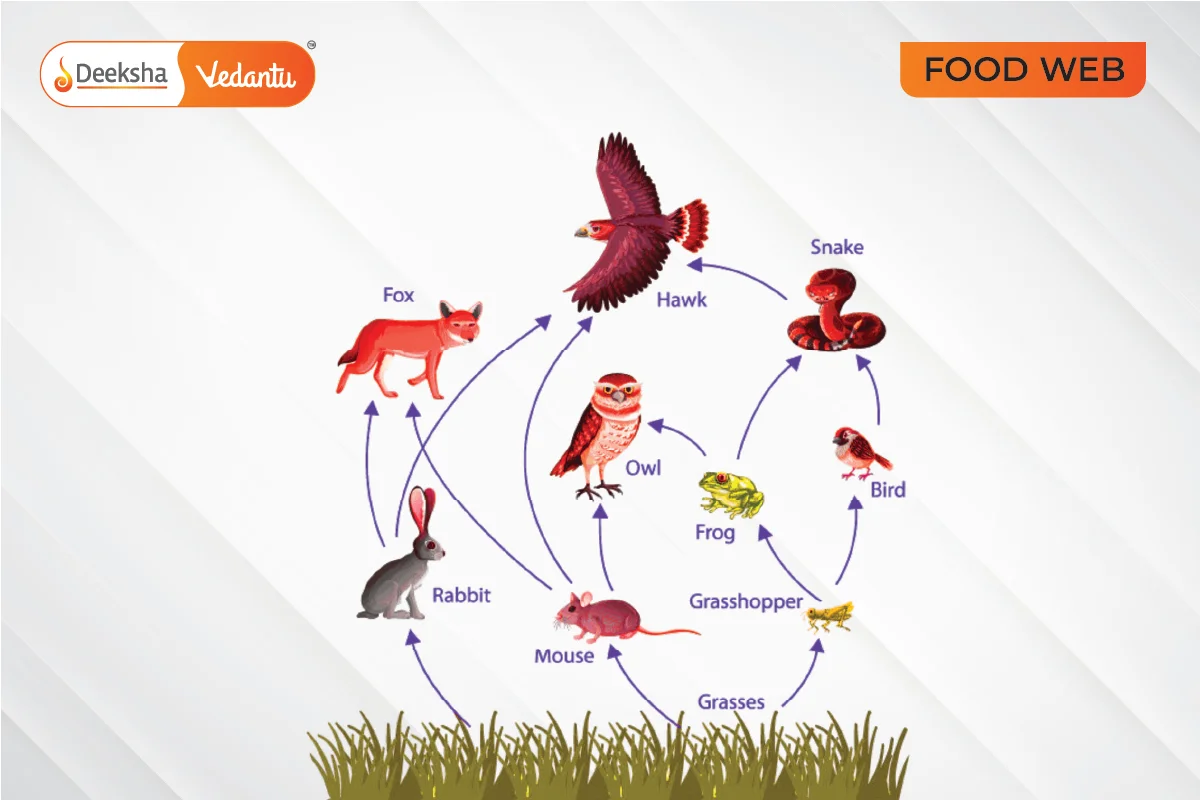
A food web is a more complex structure that interlinks multiple food chains within an ecosystem. It illustrates how different food chains are connected and how energy and nutrients flow among various organisms.
Types of Food Chains
- Grazing Food Chain:
- Starts from living green plants going up to herbivores and various carnivores.
- Detritus Food Chain:
- Begins with dead organic matter and includes organisms like bacteria and fungi which decompose this material.
Importance of the Food Chain
- Energy Flow: Demonstrates how energy is transferred from one organism to another.
- Ecological Stability: Helps maintain balance in the ecosystem by controlling the population of various organisms.
- Nutrient Cycling: Essential for recycling nutrients back into the environment.
Conclusion
Understanding food chains is crucial for comprehending how ecosystems function. They not only illustrate the energy flow but also show the intricate interdependencies among different species, which help maintain ecological balance.
FAQs
Decomposers break down dead and decaying organisms, recycling essential nutrients back into the ecosystem, thus facilitating nutrient cycling and soil fertility.
Food chains illustrate the transfer of energy and nutrients from one organism to another within an ecosystem, highlighting the interdependence of different species and helping maintain ecological balance.
A food chain is a linear sequence showing energy flow between organisms. A food web is a complex network of many interconnected food chains showing the various paths through which energy and nutrients flow in an ecosystem.
Consumers are classified into several types based on their diet:
- Herbivores: Consume plants.
- Carnivores: Eat other animals.
- Omnivores: Eat both plants and animals.
- Scavengers: Feed on dead organisms.
Parasites: Live off other living organisms, often harming them.
A food chain starts with producers, such as plants and algae, that generate food through photosynthesis. It ends with decomposers like bacteria and fungi that break down dead organic matter.
A food chain describes the sequence of who eats whom in an ecosystem to show the flow of energy and nutrients from one organism to another.










Get Social