
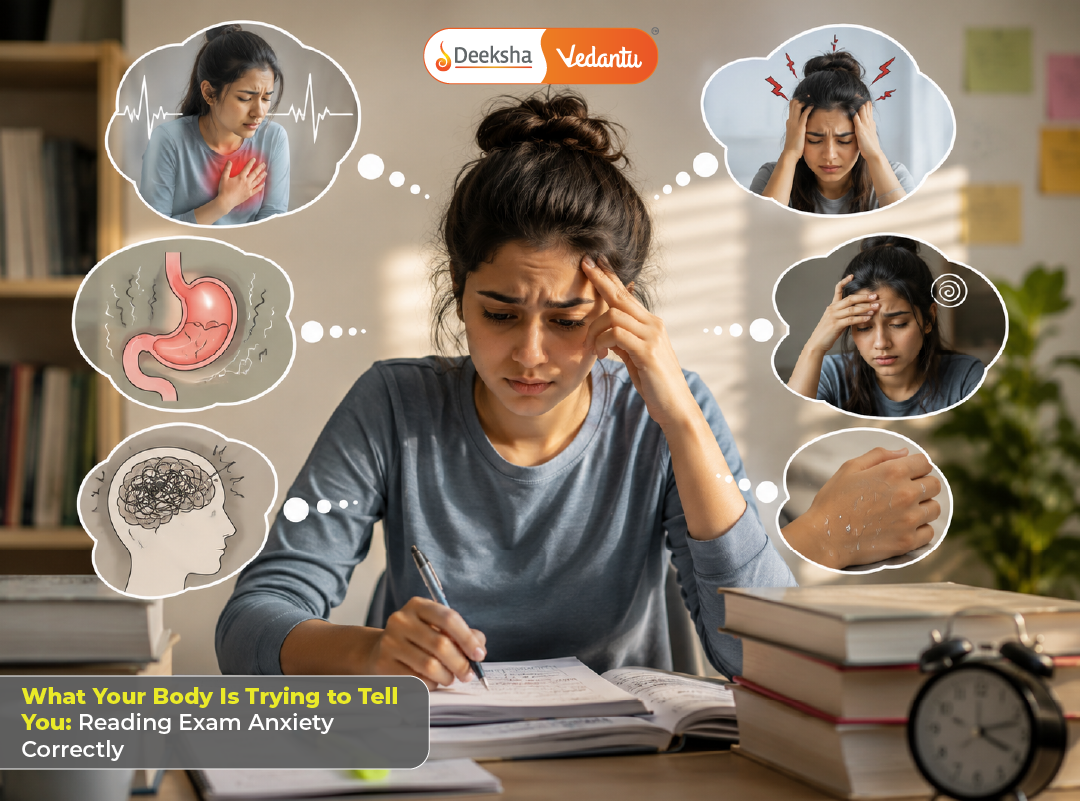
Most exam anxiety advice jumps straight to fixes – breathe deeply, think positive, relax – without ever explaining what’s actually happening in your body first. That’s backward. Your body isn’t malfunctioning before an exam; it’s running an old, well-intentioned survival response that happens to be a poor fit for a written test. Understanding exactly what each physical signal means changes how you respond to it, and that shift alone often does more than any generic relaxation tip.
Racing Heart and Rapid Breathing: Your Body Preparing for a Threat That Isn’t Physical
What’s happening: Your nervous system has interpreted the exam as a genuine threat, triggering the same fight-or-flight response that would activate if you were facing actual physical danger – adrenaline surges, heart rate climbs, breathing quickens, all designed to prepare your body for intense physical action.
Why this misfires for an exam: This response evolved to help you run from danger or fight it off, not to help you recall a formula or structure a five-mark answer. The extra oxygen and adrenaline flooding your system have nowhere useful to go, which is exactly why a racing heart before an exam often feels like pure discomfort rather than the “readiness” it’s actually designed to provide.
What genuinely helps: Slow, deliberate exhales – longer than your inhales – signal safety back to your nervous system faster than trying to consciously calm your thoughts first. This works because breathing is one of the few parts of this entire response you can directly and immediately control, and slowing it down genuinely does begin to slow the rest of the cascade.
Blanking Out or “Going Empty” Mid-Exam: Working Memory Getting Hijacked
What’s happening: Under high stress, the part of your brain responsible for holding and manipulating information in the moment – working memory – gets partially crowded out by the same threat-response system described above, which is actively demanding attention and resources elsewhere.
Why this misfires for an exam: You haven’t actually forgotten the material; it’s still there, genuinely stored. What’s temporarily impaired is your ability to access it smoothly under this specific stress load, which is exactly why the same question you blanked on in the exam hall often comes back to you clearly the moment you walk out and the pressure lifts.
What genuinely helps: Move to a different question immediately rather than staying stuck, fighting to force recall under active stress. Returning to the blanked question a few minutes later, once your stress response has settled slightly, frequently succeeds where the original attempt failed – not because you learned anything new in between, but because your working memory has more room to actually function again.
An Upset Stomach or Nausea Before an Exam: The Gut-Brain Connection Under Stress
What’s happening: Your digestive system is genuinely, physically affected by the same stress hormones flooding your body – this is a well-documented, direct physiological link, not an exaggeration or “just in your head.”
Why this misfires for an exam: Digestion is metabolically expensive, and under a perceived threat, your body deprioritizes it in favor of resources it considers more urgent – which is exactly why a stomach that felt completely fine an hour earlier can turn queasy specifically as exam time approaches.
What genuinely helps: Eating something light and familiar beforehand, rather than skipping food entirely out of nausea or forcing down something heavy, tends to sit better under this specific kind of stress. This is also exactly why exam day is the wrong day to try a completely new breakfast or unfamiliar food – familiarity itself reduces one more variable your already-taxed system has to process.
Sweaty Palms and Trembling Hands: Preparing Muscles That Don’t Need to Move
What’s happening: The same fight-or-flight activation increases blood flow to your muscles and skin, preparing your body for physical exertion that a written exam simply never requires.
Why this misfires for an exam: There’s no actual physical action to release this prepared energy into, which is why it often manifests instead as a subtle tremor or clammy hands – energy mobilized with nowhere productive to go.
What genuinely helps: A brief burst of physical movement before entering the exam hall – a short walk, some light stretching, even just shaking out your hands deliberately – gives this mobilized energy somewhere to actually go, which tends to reduce the trembling more effectively than sitting still and trying to will it away.
Reading the Same Line Repeatedly Without Absorbing It: Attention Narrowing Under Threat
What’s happening: Under significant stress, attention tends to narrow and fixate, sometimes looping on the same stimulus repeatedly rather than moving forward smoothly – a vestige of a threat-response system built to stay intensely focused on a single danger rather than process broader information calmly.
Why this misfires for an exam: A question paper needs broad, flexible attention moving across multiple questions, not narrow fixation on one line – which is exactly why anxious re-reading of the same sentence, five or six times without progress, is a genuinely common and recognizable exam-hall experience.
What genuinely helps: Physically moving your finger or pen along the line as you read can help break this attentional loop, giving your focus a concrete anchor to follow rather than drifting back to the same starting point repeatedly.
The Signals, Read Correctly
| Physical Signal | What It Actually Means | What Genuinely Helps |
| Racing heart, fast breathing | Threat response, not real danger | Slow, deliberate exhales |
| Blanking out mid-exam | Working memory temporarily crowded, not lost knowledge | Move on, return to it a few minutes later |
| Upset stomach or nausea | Digestion genuinely deprioritized under stress | Light, familiar food – nothing new or heavy |
| Sweaty palms, trembling | Muscles prepared for action with nowhere to go | Brief physical movement before the exam |
| Re-reading the same line repeatedly | Attention narrowing under stress | Anchor focus with a finger or pen while reading |
Why This Reframe Actually Matters
Here’s what changes once you understand these signals correctly: a racing heart stops meaning “something is wrong with me” and starts meaning “my body is doing something old and automatic that I can actively work with.” That shift alone reduces a second layer of anxiety that often stacks on top of the first – the anxiety about being anxious, which tends to be worse than the original physical response itself. Once you stop treating these signals as evidence of failure and start treating them as simply misdirected preparation, you’re no longer fighting two things at once.
This same body-first understanding connects to why willpower alone doesn’t fix distraction – in both cases, working with your actual physiology tends to outperform simply trying to think or will your way past it. And on the days these signals show up before a study session rather than an exam itself, the same underlying idea applies: starting before you feel ready works precisely because it doesn’t require the anxious signal to disappear first – it just requires moving forward alongside it.
If exam anxiety is consistently severe enough to disrupt sleep, eating, or daily functioning well beyond the exam period itself – not just the days directly before a test – that’s worth a conversation with a school counselor or a mental health professional, since ongoing, persistent anxiety deserves support beyond what any single article or exam-day technique can offer.
Frequently Asked Questions
Is it possible to eliminate exam anxiety completely, or is some amount always normal?
Some degree of this response is genuinely normal and even mildly useful – a completely flat, zero-arousal state before an exam isn’t actually optimal either; the goal isn’t elimination, it’s keeping the response manageable enough that it supports rather than overwhelms your performance.
Why do some students seem to show none of these physical signals at all?
Individual stress responses vary considerably, and some students experience this activation more mentally (racing thoughts, worry) than physically, or have simply built enough familiarity with high-pressure testing that their body’s response has become more moderate over time.
Should I try to hide these physical signals from myself, or is naming them out loud actually useful?
Naming a signal specifically – “this is my heart rate responding to perceived threat, not real danger” – tends to help more than ignoring or suppressing it, since specific recognition is exactly what allows you to apply the right response rather than just enduring general discomfort.
Exam anxiety was never really a sign that something’s broken – it’s an old, well-meaning system doing exactly what it evolved to do, just aimed at the wrong kind of threat. Once you can read each signal for what it actually is, you stop needing to fight your own body during an exam and start being able to work alongside it instead.












Get Social