
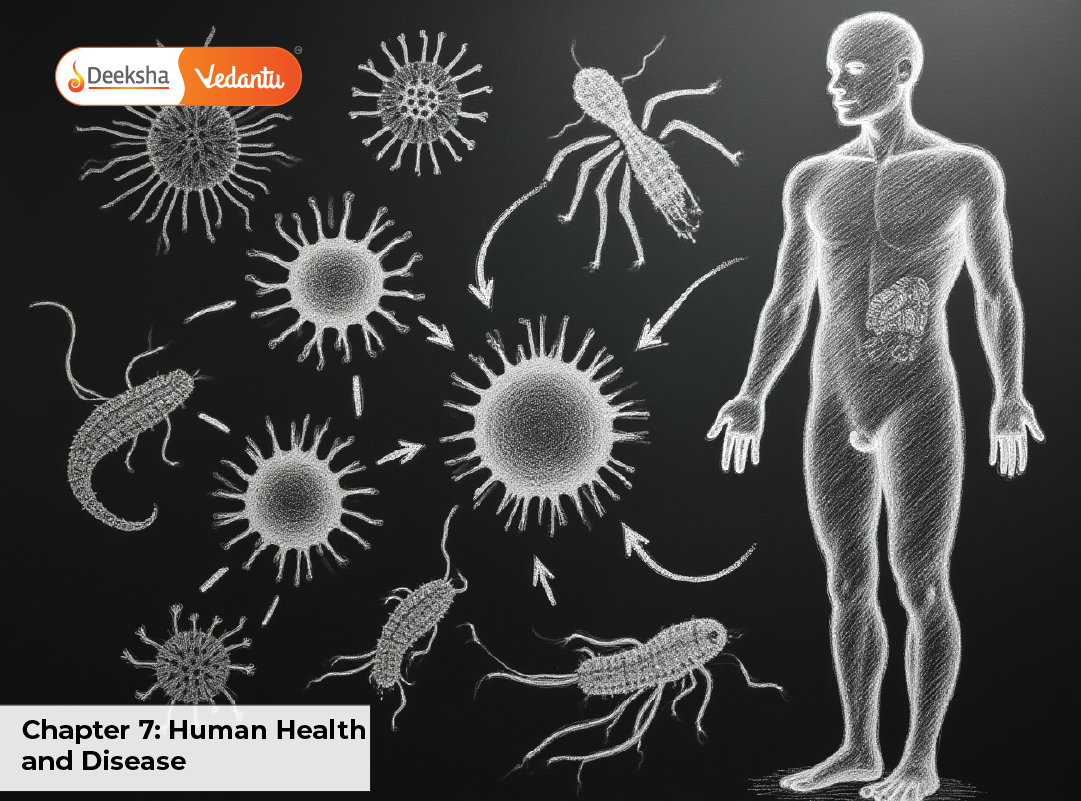


Chapter 7, titled “Human Health and Disease,” from the Class 12 NCERT Biology textbook, holds critical importance in the NEET 2025 syllabus. This chapter builds foundational knowledge about how the human body functions to stay healthy, the role of immunity, how diseases spread and are prevented, and the profound biological and social impact of drug abuse. A clear understanding of this chapter enables students to make real-world connections with immunization, public health practices, and modern-day medical interventions.
This chapter is also among the most commonly tested units in NEET, making it essential for every aspirant aiming for a high score in biology. It encompasses critical elements like innate and acquired immunity, the role of lymphoid organs, vaccines and their types, major infectious and non-infectious diseases, and substance abuse — all of which are tested both theoretically and clinically.
Detailed Exploration of Core Topics
1. Definition and Determinants of Health
According to the World Health Organization (WHO), health is not simply the absence of illness. Rather, it encompasses a complete state of physical, mental, and social well-being. The concept of health is holistic, determined by genetic, environmental, social, and lifestyle factors. Balanced nutrition, regular physical activity, proper sanitation, mental peace, access to clean water, and preventive healthcare are vital for maintaining good health. It also includes societal aspects such as education, income, and cultural beliefs, all of which affect public health.
2. Classification of Diseases
- Infectious Diseases: These are caused by pathogenic microbes and spread from person to person or through vectors.
- Bacterial: Tuberculosis (TB), Cholera
- Viral: AIDS, Common cold
- Protozoan: Malaria, Amoebiasis
- Helminthic: Filariasis
- Fungal: Ringworm
- Non-Infectious Diseases: These are not contagious and arise due to genetic, environmental, or lifestyle causes.
- Examples: Hypertension, Diabetes, Cancer
Key distinctions between the two include transmission methods, prevention strategies, and treatment protocols.
3. Immunity: The Defense Mechanism of the Body
The immune system enables the body to fight against harmful pathogens.
- Innate Immunity: This is the body’s natural defense and is non-specific.
- Barriers:
- Physical: Skin, mucous membranes
- Physiological: Saliva, tears, acidic pH
- Cellular: Phagocytes, NK cells
- Cytokine Barriers: Interferons
- Barriers:
- Acquired Immunity: This is specific and acquired during the lifetime after exposure to pathogens.
- Humoral Immunity: Involves B cells producing antibodies
- Cell-Mediated Immunity: T cells destroy infected or abnormal cells
Both types of immunity work in tandem to protect the human body from infections and harmful substances.
4. Lymphoid Organs: Structure and Functions
Lymphoid organs help in the maturation, activation, and proliferation of lymphocytes.
- Primary Lymphoid Organs:
- Bone marrow: Produces all blood cells
- Thymus: Site of T-cell maturation
- Secondary Lymphoid Organs:
- Spleen: Filters blood, removes old RBCs
- Lymph nodes: Trap antigens and present them to lymphocytes
- Tonsils, Peyer’s patches, MALT: Provide mucosal immunity
These organs are critical hubs where immune responses are generated and regulated.
5. Vaccines and Types of Immunity
Vaccination is a technique to stimulate immune memory. It plays a vital role in public health management.
- Active Immunity: Natural (infection) or artificial (vaccine). Long-lasting, slower response.
- Passive Immunity: Ready-made antibodies. Temporary, immediate effect.
Vaccine Types:
- Live Attenuated: MMR (measles, mumps, rubella)
- Inactivated: Polio (IPV)
- Toxoids: Tetanus
- Recombinant/Subunit: Hepatitis B
Mass immunization programs (like Polio Eradication Drive) highlight the importance of vaccines in controlling epidemics.
6. Pathogens, Diseases, and Their Prevention
Several microbes lead to life-threatening diseases:
- HIV/AIDS: Caused by Human Immunodeficiency Virus. Transmitted via unprotected sex, blood transfusion, contaminated needles, and from mother to fetus. Attacks CD4+ T-helper cells.
- Malaria: Caused by Plasmodium species. Transmitted by female Anopheles mosquito. Preventive methods include mosquito nets, repellents, and anti-malarial drugs.
- Cancer: Uncontrolled cell growth leading to tumors. Malignant tumors spread via metastasis. Causes: Carcinogens, viruses, genetic mutations. Treatment includes chemotherapy, radiotherapy, surgery, immunotherapy.
Control measures involve sanitation, awareness, vaccination, and prompt diagnosis.
7. Substance Abuse and Its Consequences
Addiction to drugs and alcohol leads to long-term physical, psychological, and social issues.
- Common Drugs Abused: Cocaine, opioids (morphine, heroin), cannabinoids, and alcohol
- Health Effects: Brain damage, liver failure, hallucinations, antisocial behavior, suicidal tendencies
- Preventive Approaches:
- Education and awareness programs
- Strong parental guidance and peer support
- Medical treatment, behavioral therapy, and rehabilitation centers
Early intervention is crucial to reduce dependency and reintegrate individuals into society.
NEET-Centric MCQs for Practice
- Which type of immunity is developed through vaccination?
- a) Passive
- b) Innate
- c) Active ✅
- d) Acquired passive
- Which of the following is a characteristic of malignant tumors?
- a) Localized growth
- b) Controlled division
- c) Non-invasive nature
- d) Metastasis ✅
- Which one of these organs is not a lymphoid organ?
- a) Spleen
- b) Thymus
- c) Liver ✅
- d) Bone marrow
- What is the mode of action of interferons?
- a) Promote antibody formation
- b) Destroy infected cells
- c) Prevent viral replication ✅
- d) Produce histamine
- Which of the following diseases is not caused by a virus?
- a) AIDS
- b) Malaria ✅
- c) Influenza
- d) Common cold
Frequently Asked Questions (FAQs)
Q1. What is the difference between active and passive immunity?
Active immunity develops when a person is exposed to pathogens or vaccines and builds memory cells. Passive immunity is transferred through ready-made antibodies, such as from mother to infant.
Q2. How do lymphoid organs help fight infections?
They are responsible for producing, maturing, and activating lymphocytes which are the core of immune responses.
Q3. What are the early signs of drug addiction?
Sudden behavioral changes, withdrawal from social circles, lack of interest in activities, mood swings, and physical symptoms like tremors.
Q4. What measures are effective in preventing AIDS?
Safe sex practices, use of disposable syringes, proper screening of blood before transfusion, and awareness campaigns.
Q5. Can cancer be prevented?
To an extent, yes. Avoiding carcinogens, healthy lifestyle, regular screening, and genetic counseling can help in early detection and prevention.
NEET Preparation Tips for Chapter 7
- Focus on learning definitions and differences (e.g., types of immunity, lymphoid organs)
- Draw and label diagrams of immune responses, lymphoid system, and life cycle of HIV
- Solve NEET PYQs and revise through NCERT-based mock tests
- Create flashcards for vaccines, diseases, and key terms
- Understand cause-effect mechanisms of disease transmission and immune responses
Conclusion
“Human Health and Disease” provides a thorough understanding of how our body maintains homeostasis, resists infections, and responds to health threats. For NEET aspirants, this chapter bridges theoretical learning with practical relevance, laying the groundwork for future studies in medicine, pharmacy, and biomedical sciences. A sound grasp of these concepts not only helps in scoring high in NEET but also builds a strong sense of responsibility toward personal and public health.



Get Social