
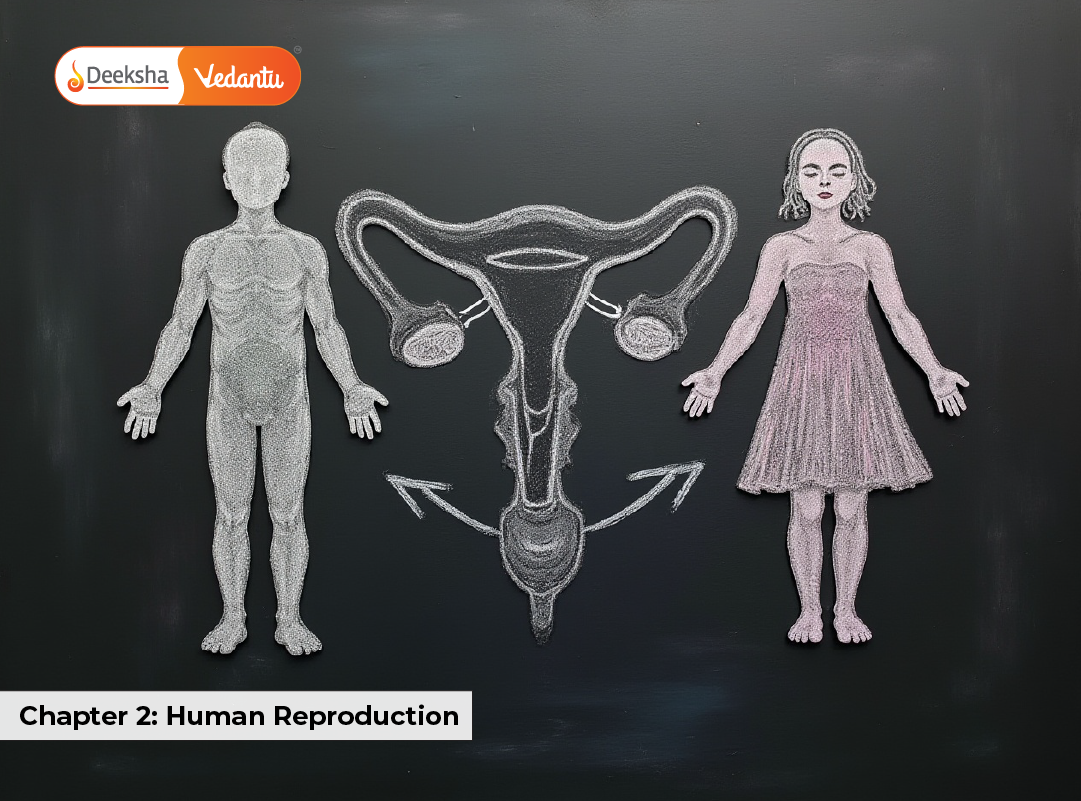


Human reproduction is a fundamental and high-weightage chapter in Class 12 NCERT Biology. It offers essential insights into the anatomy and physiology of reproductive systems, hormone regulation, fertilization, pregnancy, parturition, and lactation. A thorough understanding of these concepts is vital for NEET and other medical entrance exams, as this chapter often forms the basis for several direct and application-based questions.
In this extended guide, we explore each concept with greater depth, visual reinforcement, and conceptual clarity to give NEET aspirants an unmatched edge.
Key Topics Covered in Expanded Detail:
1. Male Reproductive System:
The male reproductive system is composed of primary sex organs, accessory ducts, glands, and external genitalia.
- Primary Sex Organ – Testes:
- Encased in the scrotum for optimal temperature regulation (2–2.5°C lower than body temp).
- Contain seminiferous tubules where spermatogenesis occurs.
- Interstitial (Leydig) cells produce testosterone, which regulates secondary sexual characteristics.
- Accessory Ducts:
- Rete testis: Channel between seminiferous tubules and vasa efferentia.
- Vasa efferentia: Conduct sperm to the epididymis.
- Epididymis: Maturation and storage site for sperm.
- Vas deferens: Transports sperm to the ejaculatory duct.
- Glands:
- Seminal vesicles: Secrete fructose-rich fluid.
- Prostate gland: Adds enzymes and milky fluid to semen.
- Bulbourethral glands: Lubricate the urethra.
- External Genitalia – Penis:
- Comprises urethra, which acts as a conduit for semen and urine.
2. Female Reproductive System:
The female reproductive system includes ovaries, duct system, uterus, and external genitalia.
- Ovaries:
- Almond-shaped organs that release ova and secrete estrogen and progesterone.
- Each ovary is connected to the pelvic wall by ligaments.
- Oviducts (Fallopian Tubes):
- Infundibulum: Funnel-like structure with fimbriae to catch ova.
- Ampulla: Site where fertilization occurs.
- Isthmus: Narrow region connecting to uterus.
- Uterus:
- Layers: Perimetrium (outer), myometrium (muscular), and endometrium (inner, sheds during menstruation).
- Cervix and Vagina:
- Cervix forms the neck of the uterus; vagina is the passageway for childbirth and menstrual flow.
3. Gametogenesis:
- Spermatogenesis:
- Begins at puberty, regulated by FSH and LH.
- Spermatogonia (2n) divide by mitosis and then meiosis to form spermatids (n).
- Spermiogenesis transforms spermatids into spermatozoa.
- Sertoli cells nourish developing sperms.
- Oogenesis:
- Initiated before birth; primary oocytes are arrested in prophase I until puberty.
- Each cycle, one oocyte completes meiosis I to form a secondary oocyte.
- Meiosis II completed only upon fertilization.
4. Menstrual Cycle:
A cyclic physiological process in females, typically lasting 28 days.
- Phases:
- Menstrual Phase (1–5 days): Shedding of endometrial lining.
- Follicular Phase (6–13 days): Follicular growth; estrogen rises.
- Ovulatory Phase (Day 14): Surge in LH leads to ovulation.
- Luteal Phase (15–28 days): Corpus luteum secretes progesterone, maintains endometrium.
- Hormonal Regulation:
- FSH, LH, estrogen, and progesterone fluctuate to control cycle events.
5. Fertilization:
- Occurs in the ampulla of the oviduct.
- Capacitation makes sperm capable of fertilizing an egg.
- Acrosomal reaction helps sperm penetrate zona pellucida.
- Fusion of sperm and secondary oocyte nuclei forms the diploid zygote.
6. Implantation and Pregnancy:
- Cleavage: Zygote undergoes mitotic divisions to form morula and then blastocyst.
- Implantation: Blastocyst embeds into endometrium (~7th day post-fertilization).
- Placenta Formation: Disc-shaped organ formed by maternal and fetal tissues.
- Hormonal Changes:
- hCG: Detected in pregnancy tests; maintains corpus luteum.
- hPL: Stimulates mammary glands.
- Progesterone & Estrogen: Sustain pregnancy.
- Relaxin: Relaxes pelvic ligaments during childbirth.
7. Parturition and Lactation:
- Parturition: Initiated by fetal ejection reflex and oxytocin release.
- Stages of Labor: Dilation, expulsion, and placental.
- Lactation:
- Prolactin: Milk production.
- Oxytocin: Milk ejection.
- Colostrum: Yellowish first milk, rich in immunoglobulins.
Important Diagrams:
- Male and Female Reproductive Systems
- Hormonal regulation chart of menstrual cycle
- Spermatogenesis and oogenesis flowcharts
- Fertilization and implantation sequence
- Labeled stages of embryo development
NEET Practice MCQs:
- Where does fertilization occur in humans?
A. Uterus
B. Ovary
C. Ampulla of oviduct
D. Cervix
Answer: C - Which hormone is responsible for milk ejection?
A. Prolactin
B. Oxytocin
C. Estrogen
D. LH
Answer: B - Spermatogenesis is initiated at:
A. Birth
B. Puberty
C. Embryonic development
D. Menopause
Answer: B - Which hormone maintains pregnancy?
A. FSH
B. LH
C. Progesterone
D. Testosterone
Answer: C - What is the correct order of events in reproduction?
A. Ovulation → Implantation → Fertilization → Pregnancy
B. Fertilization → Ovulation → Implantation → Parturition
C. Ovulation → Fertilization → Implantation → Parturition
D. Menstruation → Fertilization → Implantation → Pregnancy
Answer: C
FAQs:
What is the role of placenta in pregnancy?
The placenta serves as a life-support system for the fetus, ensuring nutrient and oxygen supply while removing carbon dioxide and waste products.
What triggers parturition?
Parturition is triggered by a neuroendocrine reflex involving uterine contractions and oxytocin release from the maternal pituitary gland.
What is the significance of colostrum?
Colostrum is the first milk secreted post-delivery. It is yellowish and contains high levels of antibodies, essential for neonatal immunity.
How long is the gestation period in humans?
A full-term pregnancy typically lasts around 280 days or 40 weeks from the last menstrual period.
How is the menstrual cycle regulated hormonally?
FSH and LH from the pituitary gland, along with ovarian hormones estrogen and progesterone, coordinate the phases of the cycle.
NEET Tips:
- Memorize hormone functions with mnemonic devices.
- Diagram-based questions are popular; practice labeling.
- Understand feedback mechanisms between pituitary and ovarian hormones.
- Solve previous NEET questions on fertilization and parturition.
- Focus on distinguishing oogenesis vs spermatogenesis.
Conclusion:
Chapter 2: Human Reproduction offers a holistic view of reproductive physiology, starting from gametogenesis and culminating in childbirth. For NEET aspirants, mastering this chapter not only ensures a strong biology score but also builds a solid foundation for future studies in medicine, embryology, and reproductive health. A blend of conceptual clarity, visual memorization, and consistent revision is the key to acing questions from this crucial chapter. Make sure to reinforce learning through mock tests, visual diagrams, and real-time application of hormonal feedback loops.



Get Social