
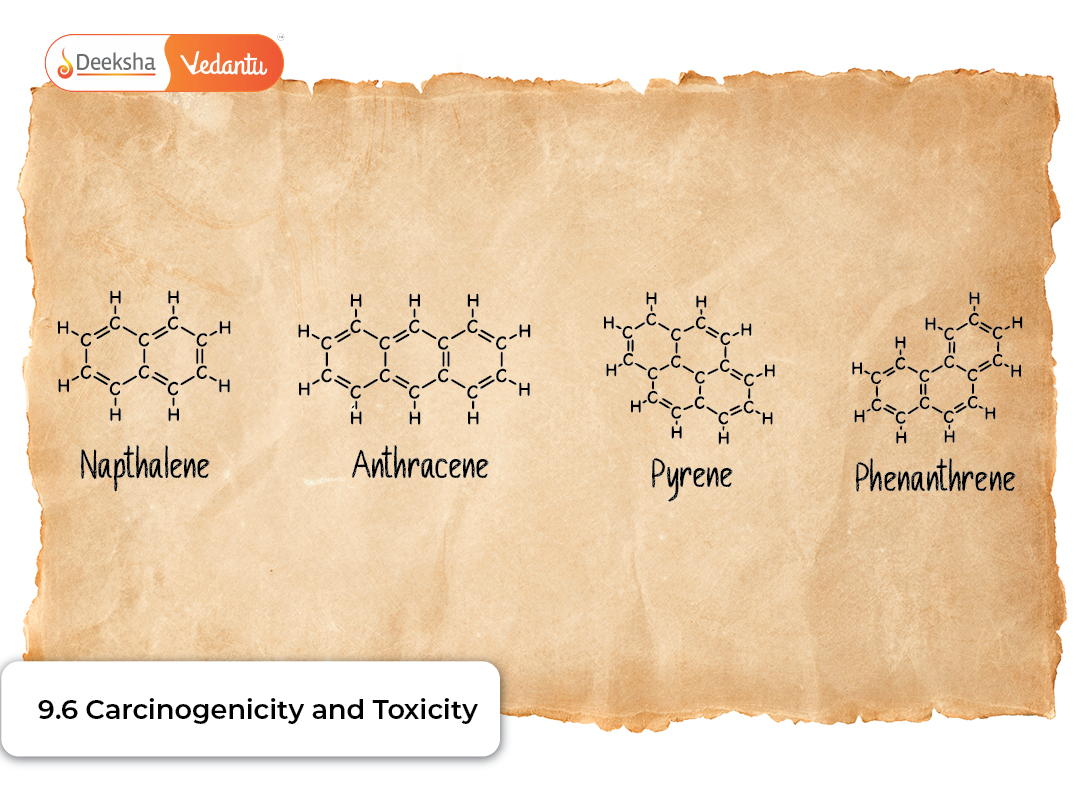


Carcinogenicity and toxicity are important concerns associated with certain hydrocarbons, particularly those derived from incomplete combustion of fuels, industrial processes, and tobacco smoke. While hydrocarbons are essential components of fuels and petrochemicals, some of them can impact biological systems negatively when inhaled, ingested, or absorbed through the skin.
Carcinogenicity refers to a substance’s ability to cause cancer by altering DNA or cellular processes. Toxicity refers to harmful effects on organs, tissues, or biochemical pathways. Many hydrocarbons-especially aromatic and polycyclic aromatic hydrocarbons (PAHs)-exhibit both toxic and carcinogenic behaviour.
Carcinogenic Hydrocarbons
Certain hydrocarbons are classified as carcinogenic due to their ability to form reactive intermediates that interact with DNA. The most harmful group includes polynuclear aromatic hydrocarbons (PAHs), which are formed during incomplete combustion of carbon‑rich substances such as coal, petroleum, tobacco, and wood.
Common Carcinogenic Hydrocarbons
- Benz[a]pyrene: Found in cigarette smoke, vehicle exhaust, and charred foods.
- Benzo[a]anthracene: Released from coal tar and industrial emissions.
- Chrysene: Present in soot, tar, and industrial pollutants.
- Benzene: A known carcinogen linked to leukemia and other blood cancers.
These compounds are characterised by multiple fused benzene rings, making them highly stable and fat‑soluble. Their ability to embed into cell membranes and DNA makes them particularly dangerous.
Mechanism of Carcinogenic Action
Carcinogenic hydrocarbons do not always cause cancer directly. Instead, they are first metabolised by the body’s enzyme systems-primarily cytochrome P450 enzymes-into reactive intermediates.
Steps in Carcinogenic Action
- Activation: PAHs are converted into epoxides or diol epoxides, which are highly reactive.
- DNA Binding: These metabolites bind to DNA bases, forming adducts.
- Mutations: DNA adducts cause replication errors during cell division.
- Loss of Cell Control: Mutations accumulate, leading to uncontrolled cell growth.
This process can eventually result in the development of cancers such as lung cancer, skin cancer, and leukemia.
Toxic Hydrocarbons
Not all toxic hydrocarbons are carcinogenic, but many cause harmful physiological effects.
Toxic Effects Include:
- Respiratory irritation and difficulty breathing
- Damage to the central nervous system (dizziness, headaches, confusion)
- Liver and kidney toxicity due to bioaccumulation
- Bone marrow suppression, especially with benzene
Common toxic hydrocarbons include benzene, toluene, and xylene (collectively called BTX compounds), which are widely used as solvents and fuel additives.
Major Sources of Exposure
Humans may be exposed to carcinogenic and toxic hydrocarbons in various environments.
Key Sources
- Vehicle exhaust and industrial emissions
- Cigarette smoke and tobacco combustion products
- Burning coal, kerosene, and biomass fuels
- Soot, tar, and petroleum residues
- Occupational settings such as refineries, chemical plants, and foundries
People living in urban or industrial regions face higher exposure to PAHs and benzene.
Health Implications
Exposure to carcinogenic and toxic hydrocarbons can result in severe health issues, especially with long‑term exposure.
Health Effects
- Cancer formation, especially lung cancer and skin cancer
- Blood disorders, including aplastic anemia and leukemia (associated with benzene)
- Organ damage to liver, kidneys, and nervous system
- Developmental and reproductive toxicity
- DNA damage and mutation accumulation
Children, elderly individuals, and workers in polluted occupations are most vulnerable.
Prevention and Safety Measures
Minimising contact with carcinogenic and toxic hydrocarbons is essential for health.
Strategies for Prevention
- Use cleaner fuels and improved combustion technologies
- Install vehicle emission controls and catalytic converters
- Reduce exposure to cigarette smoke and industrial pollutants
- Ensure proper ventilation in workplaces using solvents or petrochemicals
- Wear protective equipment (PPE) in hazardous environments
- Follow governmental safety regulations and permissible exposure limits (PELs)
These measures effectively reduce the risk of hydrocarbon‑related cancers and toxicities.
Examples of Carcinogenic PAHs
- Benz[a]pyrene
- Benzo[a]anthracene
- Chrysene
- Dibenz[a,h]anthracene
These compounds often appear in pollution-heavy environments, making them targets for environmental monitoring.
FAQs
Q1. What does carcinogenicity mean?
Carcinogenicity refers to a substance’s ability to cause cancer by damaging DNA or interfering with normal cell division.
Q2. Are all toxic hydrocarbons carcinogenic?
No. A toxic hydrocarbon may harm organs without causing cancer, but many carcinogenic hydrocarbons also exhibit toxicity.
Q3. Which hydrocarbons are major carcinogens?
Polycyclic aromatic hydrocarbons (PAHs), especially benz[a]pyrene and chrysene.
Q4. How does benzene cause health problems?
Benzene is absorbed into the bloodstream and suppresses bone marrow activity, leading to anemia, reduced immunity, and leukemia.
Q5. How can exposure to PAHs be reduced?
Avoid smoking, reduce air pollution, use cleaner fuels, and follow workplace safety practices.
Conclusion
While hydrocarbons play an essential role in energy and chemical industries, some-especially polycyclic aromatic hydrocarbons and benzene-pose significant carcinogenic and toxic risks. These compounds can enter the body from polluted air, cigarette smoke, or industrial activities, where they damage DNA, disrupt cell function, and increase the risk of cancer.
At Deeksha Vedantu, students learn to understand not only the chemistry of hydrocarbons but also their real-world health implications, building awareness and scientific literacy that go beyond textbooks.



Get Social