
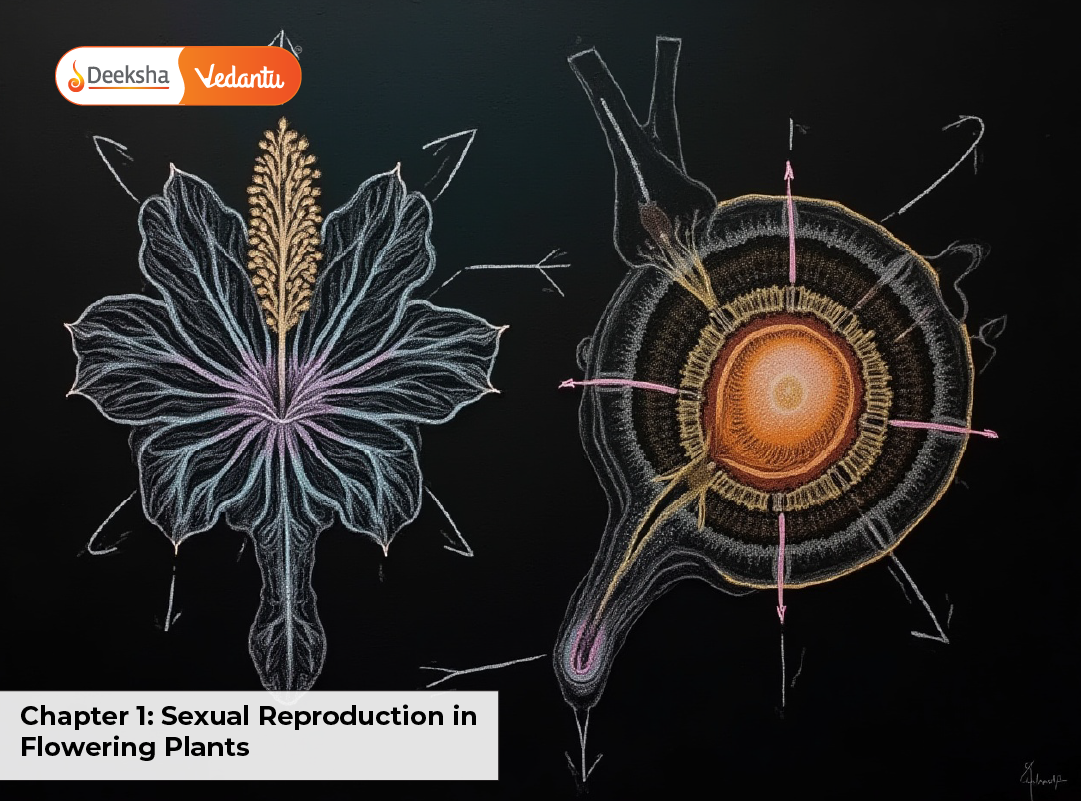


Sexual reproduction in flowering plants represents one of the most complex and fascinating phenomena in the plant kingdom. This biological process plays a pivotal role in ensuring both species continuity and the enhancement of genetic diversity, which is a key driver of evolution. In the Class 12 NCERT Biology curriculum, Chapter 1—”Sexual Reproduction in Flowering Plants”—lays the groundwork for advanced topics in genetics, plant physiology, and biotechnology. For students preparing for NEET and other medical entrance examinations, this chapter holds high weightage, making its mastery essential.
This guide provides an exhaustive overview of the concepts, processes, and terminologies, supplemented by practical examples, solved MCQs, and expert tips. It is designed to serve both as a conceptual foundation and a strategic resource for exam preparation.
Key Topics Covered in Detail:
1. Structure of a Flower:
A flowering plant’s reproductive unit is the flower, structurally organized into four concentric whorls:
- Calyx (Sepals): Protects the flower in the bud stage.
- Corolla (Petals): Usually colorful, attracting pollinators.
- Androecium (Male Reproductive Part): Composed of stamens; each stamen consists of a filament and an anther.
- Gynoecium (Female Reproductive Part): Contains the pistil, comprising stigma (pollen receptor), style (pollen tube pathway), and ovary (houses ovules).
Additional Concepts:
- Microsporangium: Located in the anthers; site of pollen grain development.
- Pollen Grain Anatomy: Contains a hard outer exine layer, an inner intine layer, and two nuclei (vegetative and generative).
2. Microsporogenesis and Megasporogenesis:
These processes initiate the development of male and female gametophytes:
- Microsporogenesis: Involves meiosis in pollen mother cells (PMCs) resulting in tetrads of haploid microspores, which mature into pollen grains.
- Megasporogenesis: Occurs in the ovule. A single megaspore mother cell undergoes meiosis to form four haploid megaspores, of which only one becomes functional.
Embryo Sac Formation:
- The functional megaspore gives rise to the embryo sac.
- The typical embryo sac is 7-celled and 8-nucleate, including:
- One egg cell
- Two synergids
- Three antipodal cells
- Two polar nuclei (later involved in triple fusion)
3. Pollination:
Pollination is essential for the transfer of male gametes to the female part.
- Types of Pollination:
- Autogamy: Self-pollination within the same flower.
- Geitonogamy: Transfer of pollen between different flowers of the same plant.
- Xenogamy: Cross-pollination between different plants.
- Pollination Agents and Their Mechanisms:
- Anemophily (Wind): Lightweight, non-sticky pollen (e.g., maize, grasses).
- Hydrophily (Water): Pollination via water currents (e.g., Vallisneria).
- Entomophily (Insects): Bright colors, scent, nectar attract insects (e.g., rose, sunflower).
- Zoophily (Animals): Involves birds, bats, etc.
- Adaptations and Outbreeding Devices:
- Temporal separation of male and female organ maturation (dichogamy)
- Physical separation (herkogamy)
- Self-incompatibility mechanisms
- Male sterility and heterostyly
4. Double Fertilization:
This unique feature of angiosperms involves two separate fertilization events:
- Syngamy: Fusion of one male gamete with the egg cell to form a diploid zygote.
- Triple Fusion: The second male gamete fuses with the two polar nuclei to form a triploid primary endosperm nucleus (PEN).
Significance:
- Double fertilization ensures energy efficiency by initiating endosperm formation only after successful zygote formation.
5. Post-fertilization Changes:
After fertilization, the following transformations occur:
- Endosperm Development: The triploid nucleus gives rise to nutritive tissue that supports embryo development. Three types exist:
- Nuclear
- Cellular
- Helobial
- Embryogenesis: The zygote undergoes successive mitotic divisions forming the embryo, which consists of:
- Radicle (future root)
- Plumule (future shoot)
- Cotyledons (seed leaves)
- Seed and Fruit Formation:
- Ovule becomes the seed; integuments develop into the seed coat.
- Ovary becomes the fruit; ovary wall becomes the pericarp.
6. Apomixis and Polyembryony:
- Apomixis: A form of asexual reproduction mimicking sexual reproduction. Seeds are formed without fertilization, preserving hybrid vigor. Common in Parthenium and some citrus species.
- Polyembryony: Multiple embryos develop from a single fertilized ovule. Can occur due to nucellar or integumental budding.
Important Examples and Case Studies:
- Anemophily: Maize, rice, and wheat produce large quantities of light pollen.
- Entomophily: Seen in flowers with vibrant petals and nectar glands (e.g., rose, salvia).
- Hydrophily: Vallisneria shows epihydrophily; Zostera shows hypohydrophily.
- Apomictic Plants: Hieracium, Parthenium, and some citrus varieties maintain hybrid traits.
- Cleistogamous Flowers: Viola, Oxalis, and pea ensure autogamy through unopened flowers.
NEET Practice MCQs:
- Double fertilization in angiosperms results in:
A. Two embryos
B. One embryo and one endosperm
C. Two endosperms
D. Two embryos and two endosperms
Answer: B - The development of an embryo without fertilization is called:
A. Parthenogenesis
B. Polyembryony
C. Apomixis
D. Vivipary
Answer: C - Which mechanism promotes cross-pollination in angiosperms?
A. Cleistogamy
B. Dichogamy
C. Homogamy
D. Bud Pollination
Answer: B - In angiosperms, the functional megaspore gives rise to:
A. Seed Coat
B. Endosperm
C. Embryo Sac
D. Nucellus
Answer: C - Which one of the following is an outbreeding device?
A. Syngamy
B. Apomixis
C. Self-incompatibility
D. Parthenogenesis
Answer: C
Frequently Asked Questions (FAQs):
What is the role of synergids in fertilization?
Synergids guide the pollen tube toward the egg apparatus, ensuring accurate delivery of male gametes.
How does double fertilization increase reproductive success?
It economizes energy expenditure by initiating endosperm formation only when fertilization is confirmed, leading to efficient seed development.
What are the practical uses of apomixis?
It allows the production of genetically uniform seeds from hybrids, useful in agriculture to maintain desirable traits.
Can fruits form without fertilization?
Yes. Parthenocarpy leads to fruit formation without fertilization, producing seedless fruits like bananas and grapes.
Why is triple fusion called so?
Because it involves the fusion of three nuclei—one male gamete and two polar nuclei—resulting in the triploid endosperm.
NEET Tips and Tricks:
- Memorize the structure of an embryo sac and its cell types with visual aids.
- Practice labeling diagrams for anther, ovule, and pollen grain.
- Focus on the differences between types of pollination and agents involved.
- Understand clearly how apomixis differs from normal fertilization.
- Attempt NEET previous year questions to spot commonly repeated concepts.
Conclusion:
Sexual reproduction in flowering plants is a foundational topic not only for board exams but also for NEET and other competitive tests. It integrates concepts of cell division, gamete formation, fertilization, and seed development, acting as a bridge to later topics like genetics and plant physiology. A firm understanding of this chapter, enriched with visuals, repeated practice, and conceptual clarity, can greatly enhance academic performance and exam success. Make use of diagrams, solve practice problems, and stay consistent in your revision to master this core topic with confidence.



Get Social