
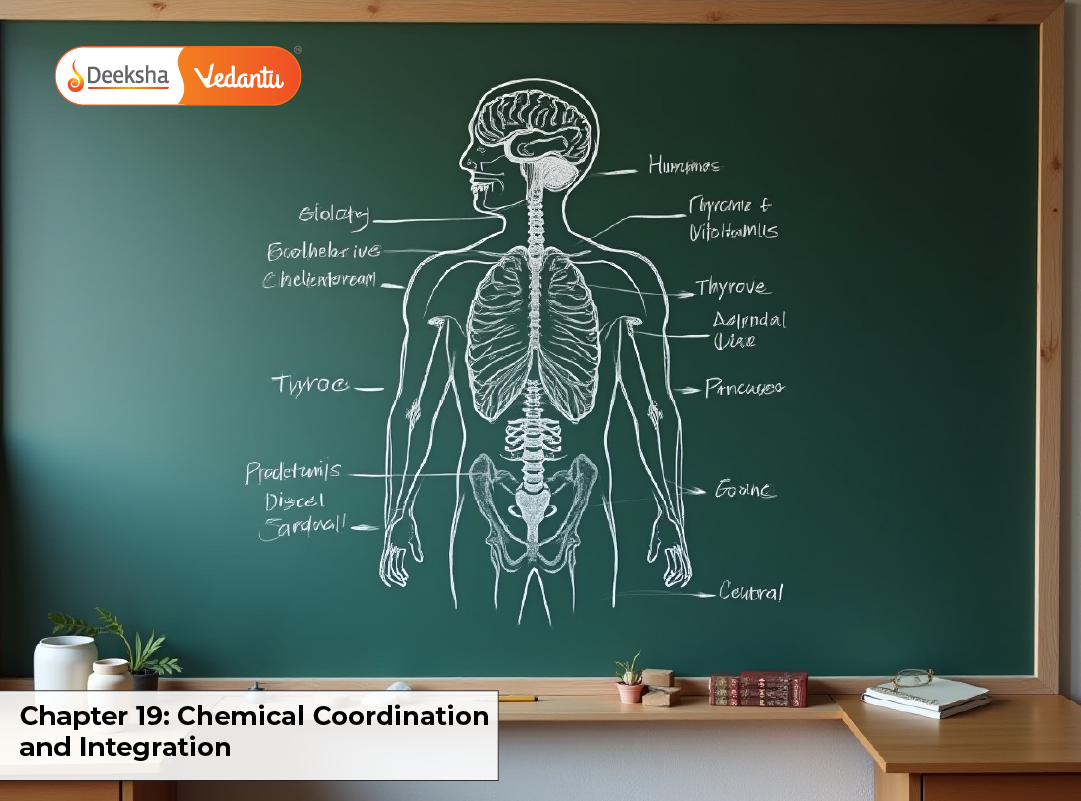


The human body is an intricately coordinated machine, and much of this coordination relies on the harmonious interaction of chemical messengers called hormones. Chapter 19 of the NCERT Class 11 Biology textbook, “Chemical Coordination and Integration”, dives deep into the world of the endocrine system. This includes the glands that secrete hormones, the hormones themselves, their mechanisms of action, and the physiological effects they produce.
Understanding this chapter is critical for NEET aspirants as it often contributes directly to 2–3 questions in the exam. The concepts in this chapter not only aid in scoring well in NEET but also build a foundation for more advanced topics in Class 12 and beyond, including reproduction, homeostasis, and human health.
Overview of Chemical Coordination
Coordination in humans is brought about through two major systems:
- The nervous system, which controls functions via electrical impulses.
- The endocrine system, which uses chemical messengers (hormones) for longer-lasting effects.
Hormones are defined as non-nutrient chemicals that function as intracellular messengers and are effective in very small quantities. They regulate growth, metabolism, reproduction, and other vital functions.
Some hormones are peptides/proteins, others are steroids, and a few are amines derived from amino acids.
Endocrine Glands of the Human Body
Endocrine glands are ductless glands that release their secretions directly into the bloodstream. The major human endocrine glands include:
| Gland | Location | Hormones Secreted | Type |
| Hypothalamus | Base of brain | Releasing and inhibiting hormones | Endocrine |
| Pituitary Gland | Below hypothalamus | GH, FSH, LH, ACTH, TSH, Prolactin | Endocrine |
| Pineal Gland | Diencephalon | Melatonin | Endocrine |
| Thyroid Gland | Neck region | T3, T4, Calcitonin | Endocrine |
| Parathyroid | Behind thyroid | Parathyroid hormone (PTH) | Endocrine |
| Adrenal Glands | Above kidneys | Cortisol, Aldosterone, Adrenaline | Endocrine |
| Pancreas | Abdominal cavity | Insulin, Glucagon, Somatostatin | Mixed |
| Gonads (Testes/Ovaries) | Pelvic region | Testosterone, Estrogen, Progesterone | Endocrine |
Hypothalamus: The Neuroendocrine Bridge
The hypothalamus connects the nervous and endocrine systems. It regulates the secretion of hormones from the anterior pituitary through specific releasing and inhibiting hormones.
Examples:
- GnRH: Stimulates FSH and LH secretion
- TRH: Stimulates TSH release
- CRH: Stimulates ACTH release
- GHIH (Somatostatin): Inhibits GH release
Pituitary Gland – The Master Gland
The pituitary gland is divided into two parts:
Anterior Pituitary (Adenohypophysis)
- Growth Hormone (GH): Promotes body growth; excess causes gigantism/acromegaly, and deficiency causes dwarfism.
- Thyroid Stimulating Hormone (TSH): Stimulates thyroid hormone production.
- Adrenocorticotropic Hormone (ACTH): Stimulates adrenal cortex.
- Follicle Stimulating Hormone (FSH) & Luteinising Hormone (LH): Regulate gonadal functions.
- Prolactin (PRL): Stimulates milk production in lactating women.
Posterior Pituitary (Neurohypophysis)
- Oxytocin: Induces uterine contractions and milk ejection.
- Antidiuretic Hormone (ADH / Vasopressin): Promotes water reabsorption in kidneys, maintaining osmotic balance.
Pineal Gland
- Secretes melatonin, regulating the circadian rhythm and reproductive cycles in some animals.
- Darkness stimulates, while light inhibits melatonin secretion.
Thyroid Gland
Located in the neck, the thyroid produces:
- T3 (Triiodothyronine) and T4 (Thyroxine): Regulate basal metabolic rate, growth, and development.
- Calcitonin: Lowers blood calcium levels.
Disorders
- Hypothyroidism: Leads to cretinism in children and myxedema in adults.
- Hyperthyroidism: Leads to Grave’s disease with symptoms like weight loss, increased appetite, and anxiety.
- Goitre: Enlargement of the thyroid due to iodine deficiency.
Parathyroid Glands
- Secretes Parathyroid Hormone (PTH) which increases blood calcium by stimulating bone resorption and calcium reabsorption in kidneys.
- Works antagonistically to calcitonin.
Thymus Gland
- Prominent in children; produces thymosins, which help in the maturation of T-lymphocytes.
- The gland shrinks post-puberty.
Adrenal Glands
Each adrenal gland has two distinct regions:
Adrenal Cortex
- Mineralocorticoids (Aldosterone): Regulate Na+/K+ balance.
- Glucocorticoids (Cortisol): Influence carbohydrate metabolism and suppress immune response.
- Androgens: Minor role in male secondary characteristics.
Adrenal Medulla
- Secretes Adrenaline (Epinephrine) and Noradrenaline: Trigger the “fight-or-flight” response by increasing heart rate, blood pressure, and glucose levels.
Pancreas – A Mixed Gland
The pancreas functions as both an endocrine and exocrine gland.
- α-cells: Glucagon → Raises blood glucose.
- β-cells: Insulin → Lowers blood glucose.
- δ-cells: Somatostatin → Inhibits secretion of both insulin and glucagon.
Disorders
- Diabetes Mellitus: Caused by insulin deficiency or resistance; leads to hyperglycemia.
- Hypoglycemia: Abnormally low blood glucose levels.
Gonads
Testes:
- Secrete testosterone, responsible for development of male secondary sexual characters and spermatogenesis.
Ovaries:
- Secrete estrogen and progesterone which regulate menstrual cycle, ovulation, pregnancy, and development of female secondary sexual characters.
Mechanism of Hormone Action
Hormones exert their effects via two mechanisms:
- Peptide hormones: Bind to cell surface receptors; act through second messengers like cAMP.
- Steroid hormones: Enter the cell and bind to intracellular receptors; alter gene expression.
Feedback Mechanisms
Most hormone secretion is controlled by negative feedback mechanisms, ensuring balance.
Example:
- Increased T3/T4 levels suppress TSH secretion.
- Low blood glucose stimulates glucagon release.
NEET Key Focus Areas
- Hormonal disorders (e.g., Cushing’s, Addison’s, Diabetes)
- Functions and regulation of GH, Insulin, Thyroxine, Cortisol, and ADH.
- Differences between peptide and steroid hormones.
- Clinical applications: Hormone assays, replacement therapies.
- Hormonal imbalance symptoms.
Diagram Suggestions (For Self-Practice)
- Human Endocrine System Map (Label major glands).
- Thyroid feedback loop (Hypothalamus → Pituitary →(Thyroid).
- Islets of Langerhans and hormone-producing cells.
Quick Revision Table
| Hormone | Gland | Function | Disorder |
| GH | Pituitary | Growth | Dwarfism, Gigantism |
| Insulin | Pancreas | Lowers blood sugar | Diabetes mellitus |
| Thyroxine | Thyroid | Metabolism | Goitre, Cretinism |
| PTH | Parathyroid | Increases blood Ca²⁺ | Tetany |
| Cortisol | Adrenal | Stress, metabolism | Addison’s, Cushing’s |
| ADH | Pituitary | Water reabsorption | Diabetes insipidus |
| Melatonin | Pineal | Sleep-wake cycle | Insomnia-like conditions |
Practice MCQs
- Which hormone is known as the “fight or flight” hormone?
- (A) Cortisol
- (B) Insulin
- (C) Adrenaline
- (D) TSH
Answer: (C) Adrenaline
- Which hormone regulates sodium and potassium balance?
- (A) Cortisol
- (B) Aldosterone
- (C) Adrenaline
- (D) Glucagon
Answer: (B) Aldosterone
- Which hormone is responsible for uterine contraction during childbirth?
- (A) LH
- (B) Oxytocin
- (C) Estrogen
- (D) Progesterone
Answer: (B) Oxytocin
- Which of the following is NOT a steroid hormone?
- (A) Estrogen
- (B) Cortisol
- (C) Insulin
- (D) Testosterone
Answer: (C) Insulin
- Parathyroid hormone influences which mineral level?
- (A) Iron
- (B) Zinc
- (C) Calcium
- (D) Sodium
Answer: (C) Calcium
FAQs
What are the most important glands for NEET from this chapter?
Focus on the pituitary, thyroid, pancreas, and adrenal glands, as most NEET questions are framed around their hormones and functions.
How can I easily remember hormone functions?
Use mnemonic techniques like “GAP-FLAT” and charts to visualize hormone origin, target, and function.
What is the role of cortisol in the body?
Cortisol is a stress hormone that helps regulate metabolism, reduces inflammation, and controls the body’s use of fats, proteins, and carbohydrates.
What differentiates peptide and steroid hormones?
Peptide hormones act via surface receptors and second messengers; steroid hormones enter cells and affect gene transcription.
Why is understanding feedback mechanisms important?
They explain how hormone levels are kept in balance, which is crucial in understanding disorders and treatments.
Can endocrine disorders be treated?
Yes, many can be managed or treated using hormone replacement therapy, medications, or lifestyle adjustments.
Conclusion
“Chemical Coordination and Integration” is more than just hormone names and definitions—it’s about understanding how the body maintains internal balance. For NEET aspirants, mastering this chapter means being able to analyze symptoms, map hormones to their functions, and solve case-based MCQs effectively. With regular practice, diagram revision, and a focus on NCERT concepts, this chapter can become a scoring asset on your path to NEET success.



Get Social