
Every last-30-days guide tells you what to add – more revision, more mock tests, more practice papers. Almost none of them tell you what to remove, even though with a fixed 30 days and a fixed number of waking hours, every hour spent on a low-value activity is an hour taken directly from something that would have moved your score more. This is the subtraction half of the strategy nobody writes about. Here’s exactly what to stop doing, and what to do with the time it frees up.
Stop 1: Reading New Chapters You Haven’t Touched All Year
What students do instead: With panic setting in, there’s a strong pull to finally open that one chapter that got skipped all year – often something like “Our Environment” or a late Maths chapter – reasoning that “at least something is better than nothing.”
Why this fails: A chapter you’re encountering for the first time with 30 days left will, at best, get you a shaky, surface-level familiarity – nowhere near exam-ready depth. Meanwhile, that same block of time spent deepening a chapter you already know at 70% could push it to 95%, which is a far larger score gain per hour invested.
What to do instead: Triage the untouched chapter honestly – is it high-weightage enough that even a rough pass is worth it, or is it low-weightage enough to accept the loss and redirect that time? This exact decision is worked through in more depth in a triage plan for when you can’t revise everything.
Stop 2: Re-Reading Notes Without Testing Yourself
What students do instead: Re-reading the textbook, class notes, or a summary sheet repeatedly, feeling productive because the content feels increasingly familiar with each pass.
Why this fails: Familiarity while reading is a notoriously unreliable signal of actual recall ability. You can read a definition for the fifth time and feel like you “know it,” while being completely unable to reproduce it from memory under exam conditions – recognition and recall are genuinely different skills, and only recall matters on exam day.
What to do instead: Convert every re-reading session into an active recall session – close the book, write down what you remember, then check against the source. This single swap, more than almost anything else on this list, tends to produce the sharpest score improvement for the same time invested.
| Passive Activity | Time Cost | Active Replacement | Why It’s Better |
| Re-reading a chapter | 30 min | Writing a blank-page recall summary, then checking | Tests actual retrieval, not just familiarity |
| Highlighting textbook lines | 20 min | Making a 5-mark answer from memory, then comparing | Builds the exact skill being tested |
| Watching a revision video passively | 25 min | Attempting a related question set immediately after | Converts passive input into applied recall |
Stop 3: Solving New, Unfamiliar Question Sources
What students do instead: With 30 days left, downloading a new, unfamiliar guide or question bank neither the student nor their teacher has used all year, hoping for extra practice variety.
Why this fails: Unfamiliar sources often don’t match the specific style, phrasing, and difficulty calibration of the actual board exam, and time spent adjusting to a new source’s quirks is time not spent on the sources that most closely mirror what you’ll actually face. There’s also a real risk of encountering poorly-framed or even incorrect questions from unverified sources, which can create confusion rather than clarity this late in preparation.
What to do instead: Stick to CBSE previous year question papers and CBSE sample papers almost exclusively in this final stretch – these are the only sources guaranteed to match the actual exam’s calibration, phrasing, and marking scheme exactly.
Stop 4: Comparing Your Syllabus Coverage to Classmates’
What students do instead: Checking in with classmates or group chats about how much syllabus everyone else has covered, often triggered by genuine anxiety about falling behind.
Why this fails: This produces pure anxiety with zero study value, and worse, it often prompts panicked, poorly-planned changes to your own schedule based on incomplete or inaccurate information about someone else’s actual preparation level. Thirty minutes spent in a comparison-driven group chat is thirty minutes not spent studying, plus the residual anxiety cost that follows you into your next study block.
What to do instead: Mute or leave comparison-heavy group chats for this specific window, and if a comparison-driven urge shows up, redirect it into checking your own progress against your own syllabus checklist instead of against another student’s uncertain claims.
Stop 5: Studying Multiple Subjects in a Single Long Session Without a Plan
What students do instead: Sitting down for a long, unstructured session and jumping between subjects reactively – an hour of Science, then switching to Maths because Science “felt boring,” then back again.
Why this fails: Unplanned subject-switching tends to happen exactly when focus starts to dip on the current subject, which means it reinforces avoidance of difficult material rather than building through it. It also fragments revision so thinly across multiple subjects in one sitting that no single subject gets the sustained depth needed to move from recognition to genuine recall.
What to do instead: Fix a subject rotation in advance for each day, and commit to it even when a particular subject starts feeling difficult mid-session – difficulty is often exactly the signal that more focused time on that specific subject is needed, not less.
The Full Cut List
| What to Stop | What to Do Instead |
| Reading brand-new, untouched chapters | Triage: quick pass only if high-weightage, otherwise redirect time |
| Re-reading notes passively | Active recall – write from memory, then check |
| Solving unfamiliar new question sources | Stick to CBSE previous year papers and sample papers |
| Comparing syllabus progress with classmates | Check only against your own checklist |
| Unplanned, reactive subject-switching | Fixed daily subject rotation, followed even when it’s hard |
What This Frees Up
Every item on this list isn’t really about eliminating effort – it’s about redirecting a fixed 30-day, fixed-hours budget away from low-yield activities and toward the ones that actually move your score. The time recovered by cutting these five habits is exactly the time that should go into rapid revision hacks to cover the full syllabus in the last 15 days and into deliberately practicing the presentation habits covered in what actually separates a 90 from a 95 in CBSE boards – both of which depend on having genuine, focused hours available, not just more hours logged at the desk.
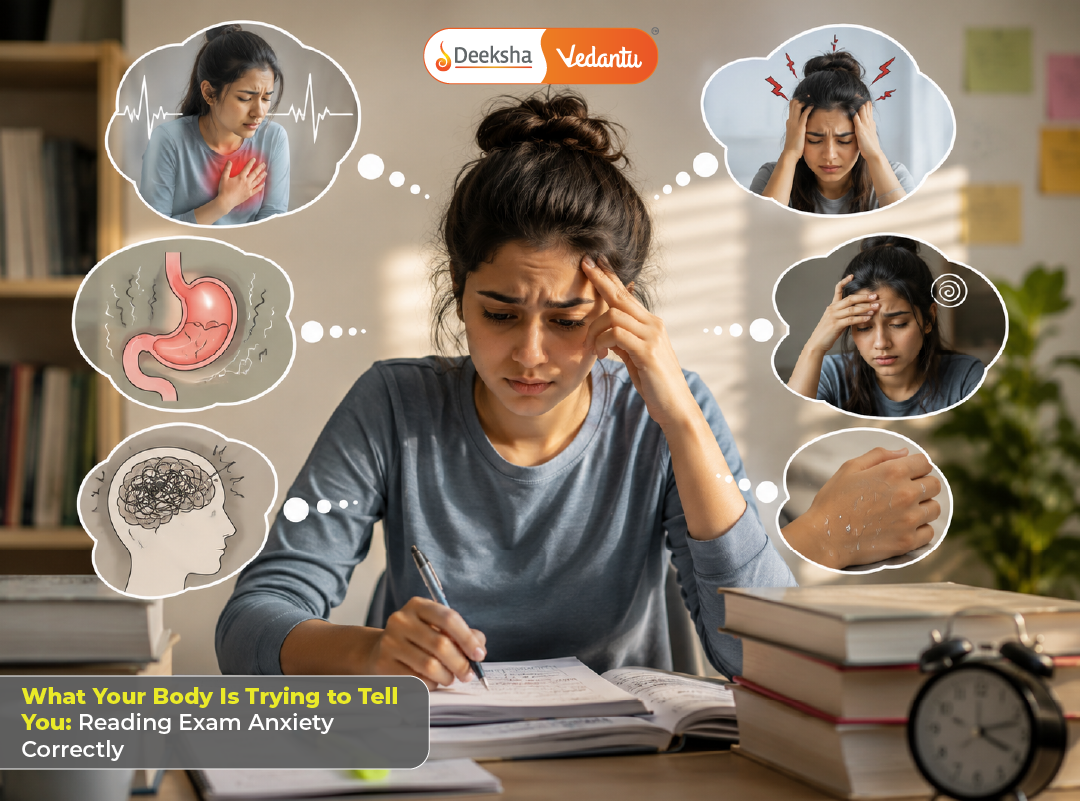
If exam-day anxiety is part of what’s driving some of these low-value habits – the comparison-checking, the panicked new-chapter reading – it’s worth addressing that directly rather than only fixing the study behavior downstream of it, since the underlying anxiety will keep resurfacing in some other form otherwise.
The last 30 days were never going to be won by adding more onto an already-full plate. They’re won by clearing the low-value activity off that plate first, so the hours that remain go entirely toward what was actually going to move the needle.











Get Social