
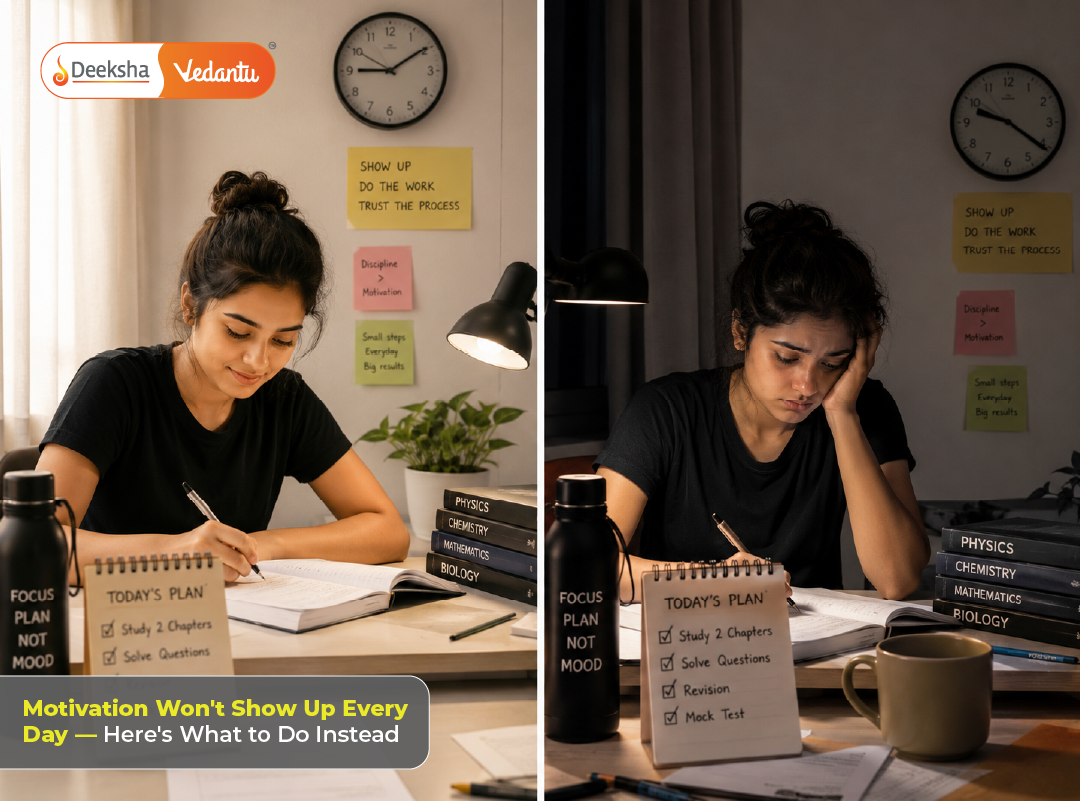
Somewhere along the way, students get told that successful people are simply more motivated than everyone else – that toppers wake up genuinely excited to study, day after day, while everyone else is just weaker-willed. This isn’t true, and believing it does real damage, because it means every unmotivated morning starts to feel like proof that something is wrong with you specifically, rather than what it actually is: a completely normal, universal human experience that has almost nothing to do with how capable or committed you are.
Motivation Was Never Meant to Be Reliable
Motivation is fundamentally a feeling, and feelings fluctuate for reasons that often have nothing to do with your goals – sleep quality, a stressful conversation earlier in the day, simple boredom with a repetitive topic, or no identifiable reason at all. Waiting for motivation before starting a study session is functionally identical to waiting for a specific weather condition before leaving the house – sometimes it cooperates, often it doesn’t, and building your entire routine around its cooperation means your routine is only as reliable as your least motivated days.
This is exactly why students who seem to have “more discipline” usually aren’t experiencing more motivation than everyone else. They’ve simply stopped depending on it.
What Actually Replaces Motivation: Starting Before You Feel Ready
The single most reliable fix here is almost embarrassingly simple, and it works precisely because it sidesteps the motivation problem entirely rather than trying to solve it: commit to just five minutes of a task, with explicit permission to stop after those five minutes if it still feels unbearable. Motivation, it turns out, is far more often a consequence of starting than a precondition for it – the initial resistance to beginning is usually the steepest part of the entire task, and once you’re a few minutes in, continuing tends to feel considerably easier than the anticipation made it seem.
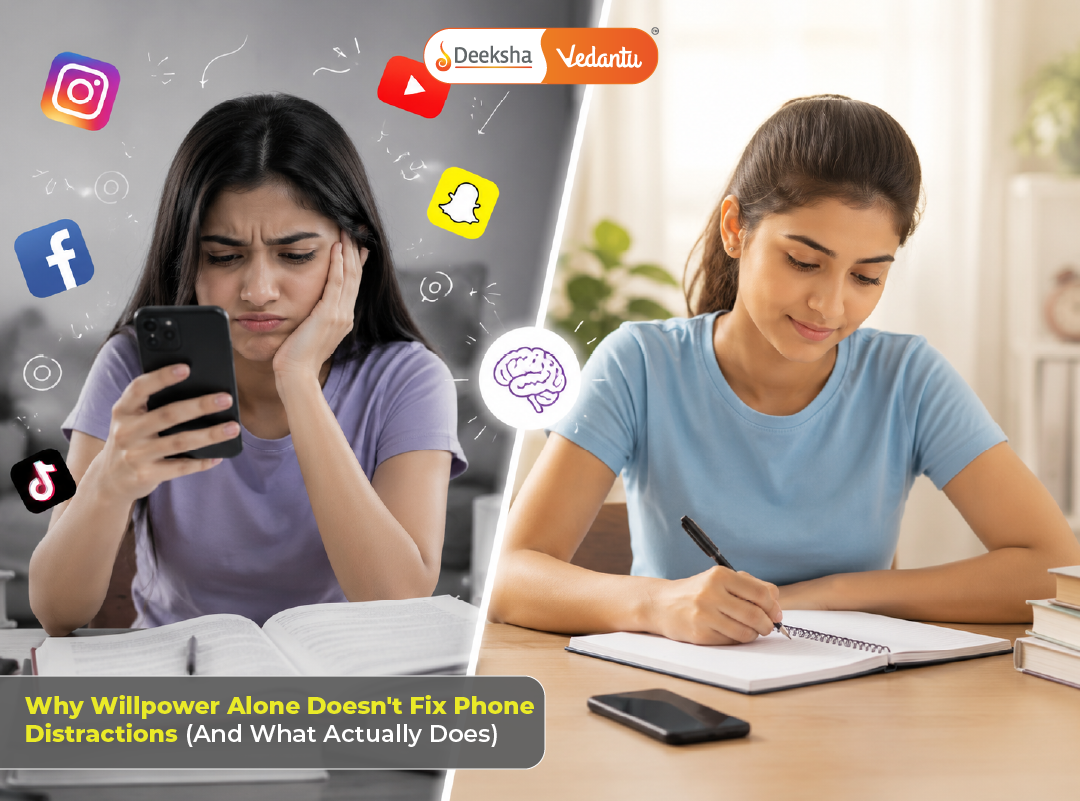
This is also exactly the same mechanism behind why friction, not willpower, actually solves phone distractions – both fixes work by removing the need for a strong internal feeling (resolve, or motivation) and replacing it with a small, structural nudge that gets you moving regardless of how you feel in the moment.
Build a Routine That Doesn’t Ask How You Feel
A second, complementary fix: attach studying to a fixed time and place, repeated daily, until it stops requiring a decision at all. Decisions cost mental energy, and “should I study now” is a decision made fresh every single day if there’s no fixed routine – which means an unmotivated day also becomes a day where you’re fighting an active decision, not just a feeling. A fixed routine – same desk, same hour, every day – removes that decision entirely, so an unmotivated day simply becomes a day where you sit down anyway, out of habit, rather than a day where motivation and decision-making both have to align before anything happens.
Track Progress, Not Motivation
Motivation is invisible and unmeasurable, which makes it a genuinely poor thing to base your confidence on. Progress, on the other hand, is concrete – chapters completed, practice papers attempted, a syllabus checklist with visibly fewer unchecked boxes than last week. On a low-motivation day, looking at how far you’ve already come tends to do more to get you moving than trying to manufacture enthusiasm you don’t currently feel. This is part of why tracking focused hours rather than total desk time matters so much – a visible, honest record of real progress is something you can return to on exactly the days motivation has nothing to offer you.
Lower the Bar on Bad Days, Don’t Cancel It Entirely
There’s a specific trap worth naming directly: on a genuinely low-motivation day, the instinct is often to skip the session entirely, reasoning that a low-quality session isn’t worth doing anyway. This is almost always the wrong call. A short, mediocre session that still happens keeps the routine itself intact, which matters more over months than any single session’s quality – while a skipped day makes the next day’s skip meaningfully easier too, and momentum, once broken, is considerably harder to rebuild than it was to maintain in the first place.
On a day where full focus genuinely isn’t available, shrinking the session – fewer topics, lighter material, fewer expectations – while still showing up protects the routine itself, which is worth more long-term than a single day’s output ever could be.
Notice What You’re Actually Avoiding
Sometimes what looks like a lack of motivation is actually something more specific hiding underneath it – a particular topic that feels confusing and therefore unpleasant to sit with, or a task that’s vague enough (“revise Chemistry”) that it’s not clear where to even begin. In these cases, the fix isn’t more motivation at all; it’s more specificity. “Revise Chemistry” is genuinely hard to start. “Solve 10 questions on chemical equations” is not, largely because the second version removes the ambiguity that was quietly doing most of the demotivating work in the first place.
The Actual Takeaway
None of this requires becoming a more motivated person – that was never really the goal, and it was never a fair standard to hold yourself against in the first place. It requires building a small number of structural habits that work regardless of how you feel on a given morning: start before you feel ready, attach studying to a fixed routine rather than a daily decision, track visible progress instead of an invisible feeling, protect the habit on bad days rather than abandoning it, and get specific enough about the actual task that starting stops feeling like a decision at all.
Motivation was never going to show up reliably, every single day, for months on end – nobody’s does, regardless of how disciplined they look from the outside. The students who seem to have it all figured out simply built a system that doesn’t need it to show up in the first place, which means the real question was never “how do I get more motivated,” but “what do I do on the days I’m not.”










Get Social