
By January, every Class 10 family hears the same words: pre-boards are coming. A pre-board exam is the dress rehearsal for the real board exam, and a student who treats it that way gains more than marks. It shows what works, what breaks under time pressure and how many weeks are left to fix it.
This guide explains CBSE Class 10 pre-board question papers for 2026-27. It covers who sets them, where to find official practice papers with marking schemes, the Class 10 pre board Maths and Science paper pattern, how to attempt a paper and check the answers yourself, and how to read the result. For the wider plan, our guide to ways to prepare for pre-board exams is a good companion.
Who Sets the Pre-Board Paper?
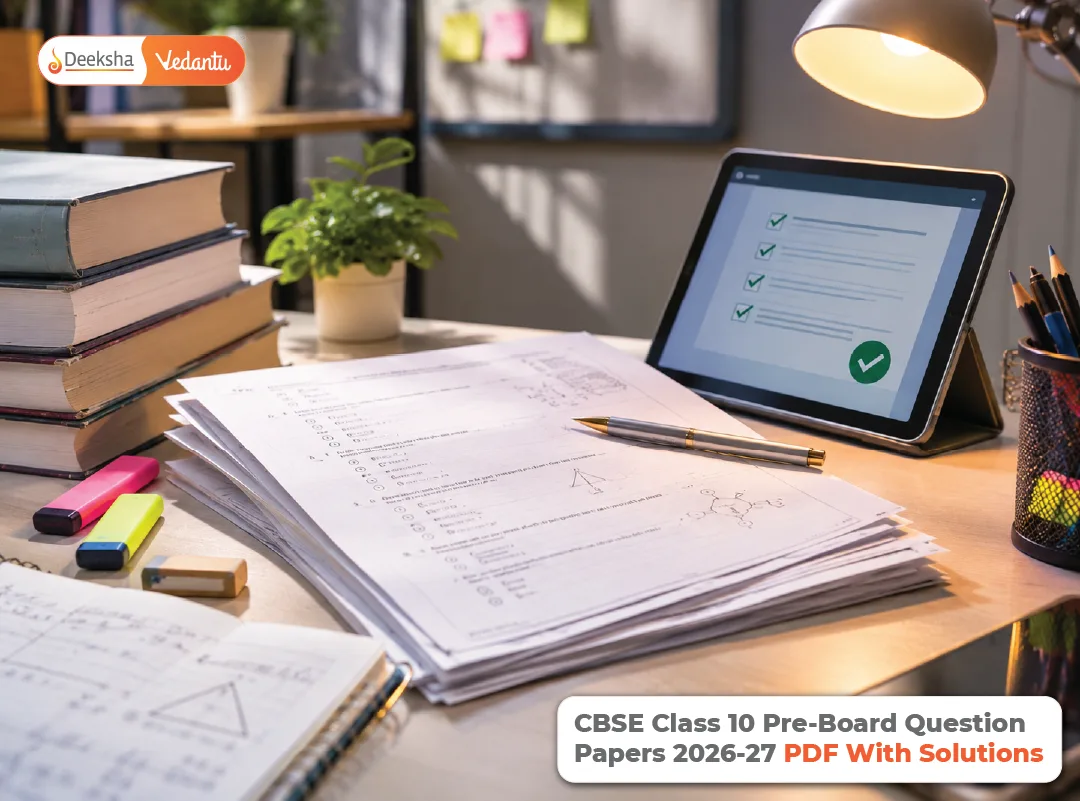
CBSE does not set pre-board papers. Each school sets its own pre-board exams, usually in December or January, and each school decides the dates, the marking and the rules. This means there is no single official “CBSE pre-board paper” for the whole country, and a pre board paper class 10 PDF that you find online is a school’s paper or a publisher’s mock paper.
What CBSE does publish is a set of official sample question papers with marking schemes. For 2026-27, CBSE issued the Class 10 sample papers on 21 September 2026, and they follow the same design as the 2025-26 papers. Because the board exam pattern is the same, the official sample papers are the safest base for pre-board practice. Our post on CBSE Class 10 sample papers and how to use them smartly explains the method.
Where to Find Official Practice Papers
CBSE publishes the Class 10 sample question papers and marking schemes on cbseacademic.nic.in, under the sample question papers section for the 2026-27 session. Open the Class 10 page, choose the subject, and download both the paper and the marking scheme.
Download the marking scheme with every paper. A paper without a marking scheme tells you what to write, but not how a board examiner would score it. For subject-wise practice sets, our page of CBSE Class 10 sample papers collects papers by subject.
The Pre-Board Dates in Context
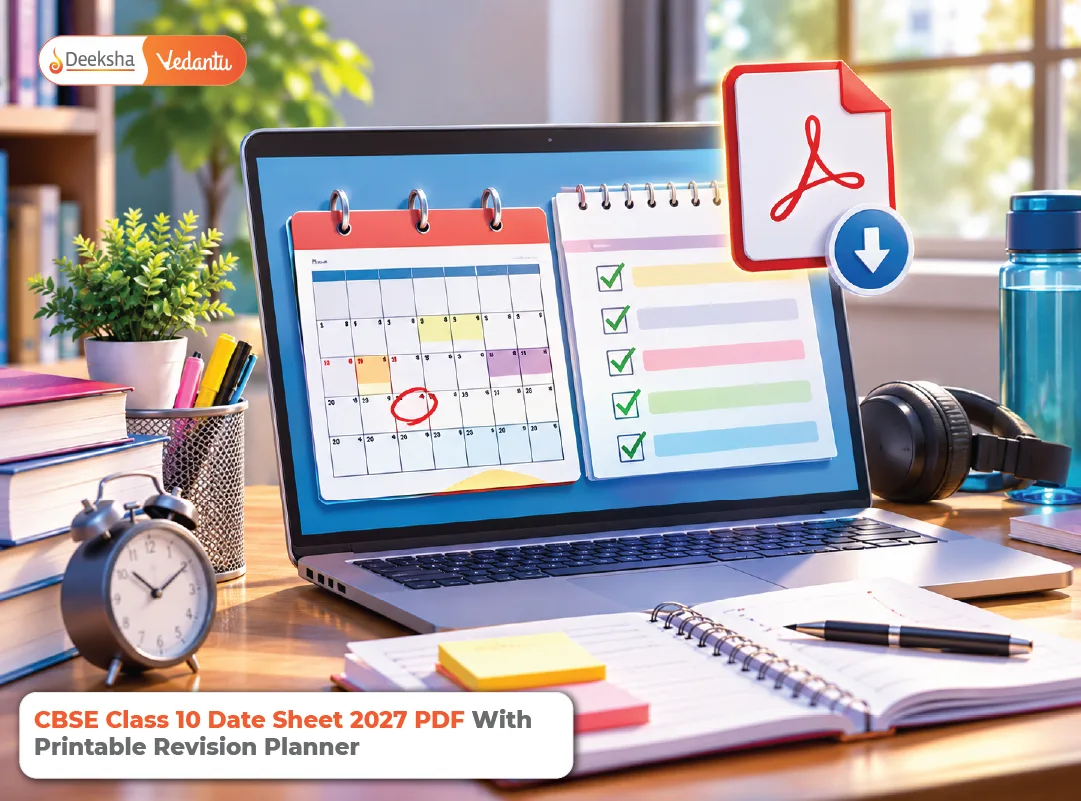
Pre-boards fall in a narrow window. The first CBSE Class 10 board exam begins on 16 February 2027, and practicals and internal assessments for most schools run from 1 January to 13 February. A school therefore holds the pre-board in December or January, so that results arrive in time for a month of repair work. Our guide to the CBSE Class 10 date sheet 2027 shows the full schedule.
Class 10 Pre-Board Maths Paper Pattern 2026-27
The Maths paper is three hours long and carries 80 marks for theory. The same structure applies to Standard and Basic:
- Section A: 20 multiple-choice questions, 1 mark each, for 20 marks.
- Section B: 5 very short answer questions, 2 marks each, for 10 marks.
- Section C: 6 short answer questions, 3 marks each, for 18 marks.
- Section D: 4 long answer questions, 5 marks each, for 20 marks.
- Section E: 3 case-based questions, 4 marks each, for 12 marks.
Because the syllabus has changed, check each practice paper against the live chapter list. Our guide to the CBSE Class 10 syllabus 2026-27 shows what is removed, so that a student does not spend time on a deleted topic such as Constructions.
Class 10 Pre-Board Science Paper Pattern 2026-27
The Science paper is also three hours long and carries 80 marks for theory:
- Section A: 20 questions, multiple-choice and assertion-reason, 1 mark each, for 20 marks.
- Section B: 6 very short answer questions, 2 marks each, for 12 marks.
- Section C: 7 short answer questions, 3 marks each, for 21 marks.
- Section D: 3 long answer questions, 5 marks each, for 15 marks.
- Section E: 3 case-based questions, 4 marks each, for 12 marks.
Chemistry, Biology and Physics each carry a similar share, so a student cannot afford to neglect one branch. Our guide to the Class 10 Science quick revision for CBSE boards helps with the final review.
How to Attempt a Pre-Board Paper
The attempt is as important as the paper. Follow these steps:
- Sit at a desk, with a clock. Remove the phone and the notes.
- Keep to the real timing. Take the three hours in one sitting, from 10:30 AM, which matches the board schedule.
- Use the reading time. Spend the first 15 minutes scanning the whole paper and marking the questions you can answer fastest.
- Start with your strongest section. Secure the marks that you are sure of.
- Write full steps. In Maths and Science numericals, steps carry marks even when the final answer is wrong.
- Leave five minutes for review. Check units, signs and diagrams.
After the paper, do not look at the answers on the same evening. Rest first, then score it the next morning with a clear head. A student who scores a paper straight after writing it tends to forgive mistakes, while one who waits a night reads the answers more honestly and learns more from them.
How to Check Your Answers Without a Teacher
A student can score a practice paper at home with the marking scheme. Here is how:
- Open the marking scheme beside the paper.
- Mark each answer the way the scheme marks it, step by step.
- Give no marks for guesses or for steps that the scheme does not reward.
- Write the total for each section on the first page.
- List every lost mark with the reason: concept gap, calculation slip, careless error or time.
Our post on the importance of mock tests and sample papers in Class 10 preparation explains why this review step is where marks are won.
Reading the Result: What the Pre-Board Tells You
A pre-board score is a signal, and not a verdict. Look at it in three ways:
- By section. A low score in Section A points to weak basics, and a low score in Section D points to weak long answers.
- By chapter. Group the lost marks by chapter. Two or three chapters usually account for most of the loss.
- By cause. Separate concept gaps from careless errors. Concept gaps need study, and careless errors need a checking routine.
A student who treats the pre-board as a map of weak spots, and uses the weeks between pre-boards and the first board exam to fix them, often gains more marks in the final exam than one who simply compares scores with friends.
A Four-Week Repair Plan After the Pre-Board
- Week 1: fix the two weakest chapters in each subject, with notes and 20 practice questions each.
- Week 2: redo every question that lost marks, without looking at the answer.
- Week 3: attempt two fresh official sample papers, and score them with the marking scheme.
- Week 4: revise the formula sheet, diagrams and short notes, and rest.
If the board exam is close, shorten each step but keep the order. Our guide to how to create a Class 10 study timetable for 2026 boards can be adapted to this plan.
What Pre-Boards Mean for PU Admission
Pre-board marks do not decide admission, because colleges use the board result. But a good pre-board performance builds the confidence that carries a student through February. For families planning ahead, read our guide on when to apply to PU colleges and our post on the CBSE Class 10 two board exams in 2027, which explains the improvement exam in May.
Common Mistakes With Pre-Boards
- Treating the pre-board casually. Attempt it as a real exam.
- Skipping the marking scheme. Without it, you cannot find where marks are lost.
- Practising deleted chapters. Check each paper against the live syllabus.
- Comparing scores with friends. Compare with your own last paper.
- Stopping after the paper. The repair work is where the gain lies.
Frequently Asked Questions
Q1. Does CBSE set the pre-board paper for Class 10?
No. Schools set their own pre-board papers. CBSE publishes official sample question papers and marking schemes for practice.
Q2. Where can I download CBSE Class 10 sample papers for 2026-27?
CBSE publishes them on cbseacademic.nic.in in the sample question papers section for Class 10, with marking schemes.
Q3. What is the Class 10 Maths paper pattern for 2027?
The paper is three hours and 80 marks, with 20 multiple-choice questions, 5 very short, 6 short, 4 long and 3 case-based questions.
Q4. What is the Class 10 Science paper pattern for 2027?
The paper is three hours and 80 marks, with 20 objective questions, 6 very short, 7 short, 3 long and 3 case-based questions.
Q5. How can I check my pre-board answers at home?
Score the paper with the CBSE marking scheme, step by step, and list every lost mark with its cause.
Conclusion
Class 10 pre-board papers for 2026-27 are a school exercise, and the official CBSE sample papers with marking schemes are the best base for practice. Learn the Maths and Science patterns, attempt each paper in exam conditions, score it with the marking scheme and use the result to guide a short repair plan. A student who does this walks into the board exam on 16 February knowing exactly where the marks are.








Get Social