
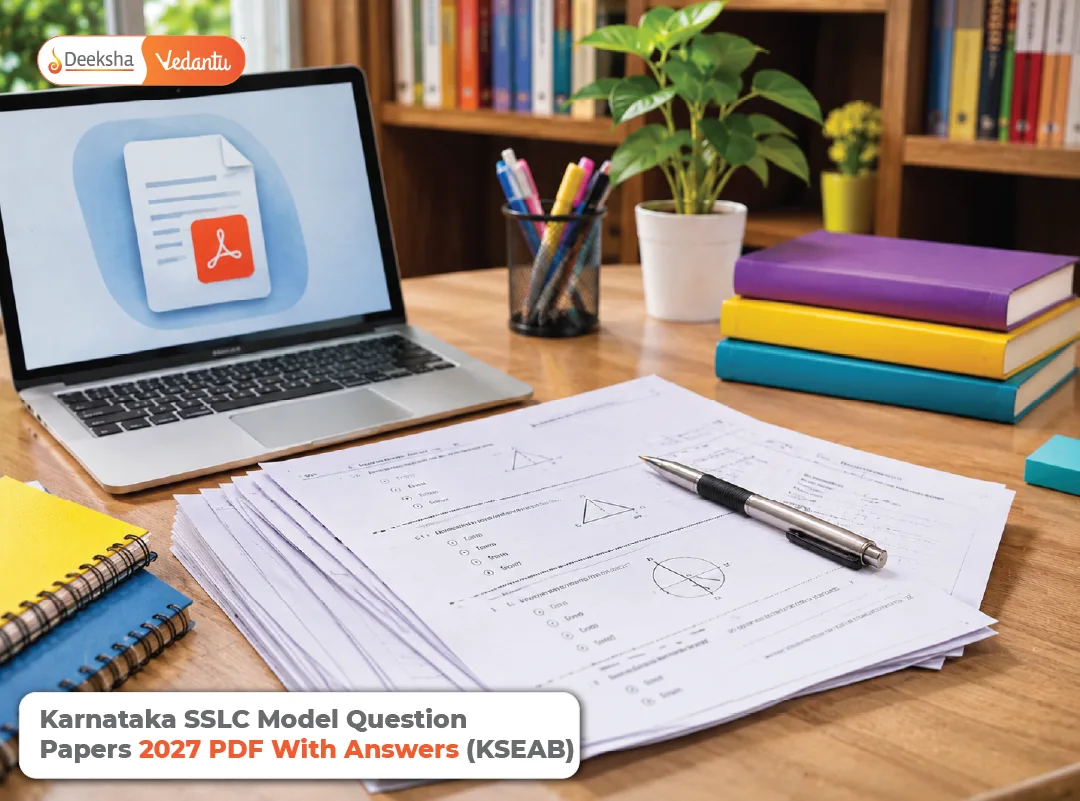
Every Karnataka SSLC student asks the same question in the months before the exam: what will the paper look like? The best answer is the model question paper. KSEAB, the Karnataka School Examination and Assessment Board, publishes model papers each year so that students and teachers can see the structure of the paper before they sit it.
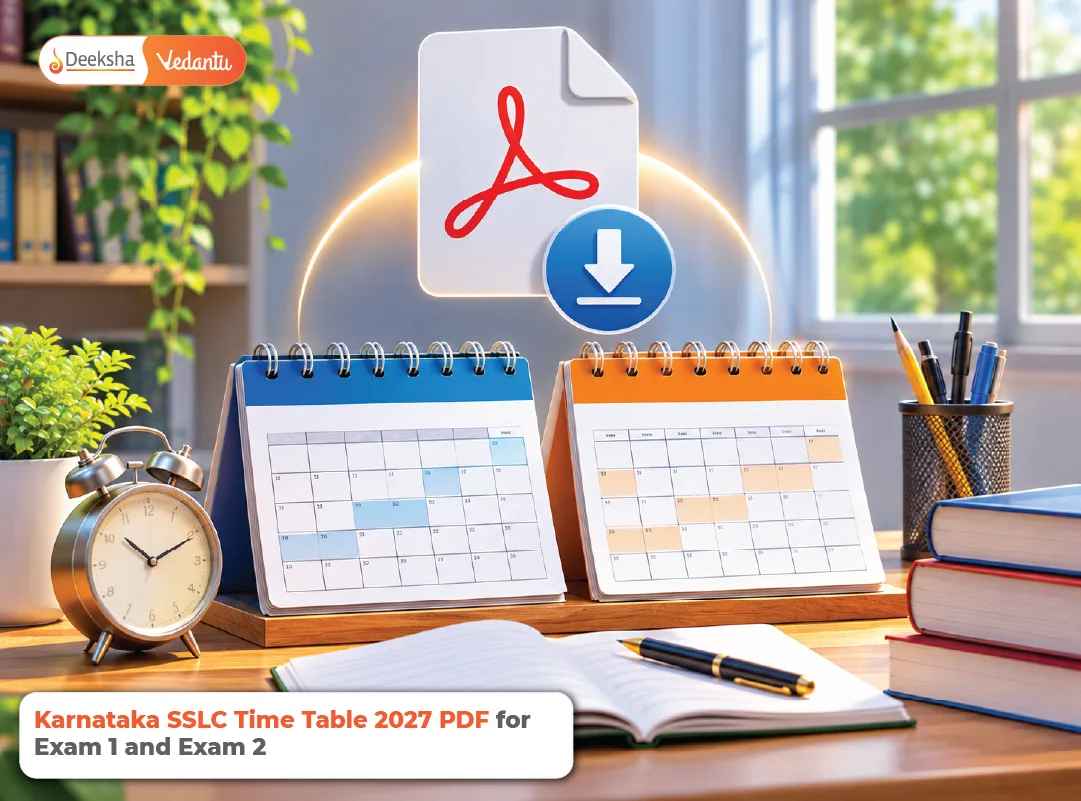
This guide explains the Karnataka SSLC model question papers for 2027. It covers where to find the KSEAB model question paper 2027 PDF, which subjects are available, how to use the SSLC model paper with answers, and a week-wise plan for turning the papers into marks before Exam 1 begins on 22 March 2027. If you want to see the dates first, our guide to the Karnataka SSLC time table 2027 lists every paper.
What Are the SSLC Model Question Papers?
A model question paper is a sample paper that follows the structure the board uses for the real exam. It is not a prediction of the questions. It shows the sections, the types of questions, the marks for each type and the way internal choices are given.
For 2026-27, KSEAB released model question papers on its website for the SSLC examinations, and reports from the education press describe them as covering Kannada, English, Mathematics, Science and Social Science, along with other subjects. Several subjects have more than one set, and the core subjects are offered in more than one language. Model key answers are published for the papers, so a student can check a paper without a teacher. Use the board’s own page as the final source, because the list of papers and answers can be updated.
Where to Download the KSEAB Model Question Paper 2027
Follow these steps to reach the official papers:
- Open the KSEAB website, kseab.karnataka.gov.in.
- Look for the SSLC 2026-27 model question papers section on the homepage, listed in the student corner as model question papers and model answers.
- Choose your subject and medium.
- Download the question paper and, where it is listed, the model answer.
Download the answer file for every paper. A paper without answers tells you what the exam looks like, but it does not tell you how a board evaluator would mark your work. For extra practice, our post on downloading KSEEB SSLC Maths mock tests with answer keys and our page of KSEEB sample papers collect more material.
What the Model Papers Tell You About the Exam
The papers show the pattern in practice. These points are confirmed for the 2026-27 exam:
- Duration: the core papers run for 3 hours 15 minutes, which includes reading time. Students should practise in that window.
- Marks: the First Language paper carries 100 written marks, and Mathematics, Science and Social Science carry 80 written marks each. Internal assessment is separate from the written paper.
- Structure: each subject has its own blueprint, which sets out the sections, the types of questions and the internal choices. Read the blueprint alongside the model paper. Our post on how the Karnataka SSLC question paper is structured shows how to read a blueprint.
Because the board can refine details each year, treat the model paper as a guide to structure and not as a promise of the exact questions.
Subject-Wise Notes for Using the Papers
Each subject asks for a different approach.
Mathematics
Solve the paper in one sitting with a timer. Then redo any question that cost marks, step by step. Maths marks come from method, so write every line, even when the answer seems obvious. Keep a formula sheet beside you while checking and note the formula that you forgot.
Science
Science rewards diagrams and clear definitions. After a paper, redraw every diagram that you missed and rewrite the definitions in your own words. Practise numericals in Physics and Chemistry with units. Our post on KSEEB Science sample papers in Kannada and English medium gives extra sets.
Social Science
Social Science covers History, Geography, Political Science, Sociology and Economics. Practise short answers in a few sentences each, and revise maps, dates and key terms. Check your answers against the model answers for the length and the points that carry marks.
Languages
For Kannada, English and the third language, practise the writing tasks: letters, essays and comprehension. Time each writing task, because languages reward neat and complete answers.
How to Use a Model Paper: A Five-Step Method
- Attempt it as a real exam. Sit at a desk, remove notes and the phone, and keep to 3 hours 15 minutes.
- Rest, then score. Check the answers the next morning with the model answer open.
- List every lost mark. Write the chapter and the reason: concept gap, calculation slip, careless error or time.
- Fix the top three weak chapters. Spend the next two or three days on them.
- Retest a similar question. Without the answer, solve a question of the same type to confirm that you have fixed the gap.
Our post on how to use sample papers to predict the question paper pattern in SSLC describes this approach in more detail.
A Week-Wise Plan Before Exam 1
Exam 1 begins on 22 March 2027, with Science on 25 March and Mathematics on 30 March. Here is a plan that works backwards from those dates.
- January: solve one model paper in each core subject, to learn the structure.
- February: solve one paper a week, alternating subjects, and review each one.
- First two weeks of March: solve two papers a week, with the first language on one day and a core subject on another.
- Last week before 22 March: solve no new papers. Revise your error list, formula sheet and diagram file.
- Between papers: use each gap for the next subject, and keep the last evening light.
A student who follows this plan will have solved around ten model papers by the exam and will know where marks are lost.
How Many Papers Should You Solve?
Quality matters more than quantity. Solving ten papers and reviewing each one carefully gains more than solving thirty papers and glancing at the answers. As a rule of thumb, a student should aim for at least four to five full papers in each core subject before Exam 1, and for two or three in each language. If a subject has several sets, solve them in order and compare your scores. A rising score tells you the repair work is working, and a flat score tells you that the same chapters are still costing marks.
A Note for Parents
Parents can help without teaching. Print the paper, set the timer, keep the room quiet and take the phone away for the three hours. After the paper, sit with your child for ten minutes and ask one question: which three questions cost the most marks, and why? That conversation, held every week, teaches a student to read her own mistakes, which is the skill that raises marks in March.
Model Papers and the Second Exam
The Karnataka SSLC now offers Exam 2 from 24 to 31 May 2027. A student who wants to improve a subject can use the same papers again. Redo the papers with the mistakes you made in Exam 1, and prepare by subject in the weeks before 24 May, because Exam 2 papers fall on consecutive days.
What the Model Papers Mean for PU Admission
The marks that the papers help you earn decide the choice of college and combination. A student who finishes Exam 1 well opens more doors. Our guide on when to apply to PU colleges shows how the SSLC calendar connects with admissions, and our post on booking a PU seat before Class 10 results explains why you should not pay a deposit before the result.
Common Mistakes With Model Papers
- Reading answers first. Attempt the paper before you open the answers.
- Solving papers without a timer. Time is a skill, and you can only build it with practice.
- Using unofficial papers only. Start with KSEAB’s own papers.
- Memorising the model paper. The real paper will have different questions.
- Not reviewing. The review step is where marks are won.
Frequently Asked Questions
Q1. Where can I download the SSLC model question paper 2027?
KSEAB publishes the model question papers on kseab.karnataka.gov.in, in the SSLC 2026-27 model question papers section.
Q2. Are the SSLC model papers available with answers?
KSEAB publishes model key answers for the papers. Check each subject on the board’s page for its answer file.
Q3. How long is the SSLC paper?
The core papers run for 3 hours 15 minutes, including reading time.
Q4. How many marks are the written papers?
The First Language paper has 100 written marks, and Mathematics, Science and Social Science have 80 written marks each.
Q5. When does the SSLC Exam 1 begin?
Exam 1 begins on 22 March 2027 and ends on 5 April 2027.
Conclusion
The Karnataka SSLC model question papers for 2027 are the best free tool a student has. Download KSEAB’s own papers and model answers, solve them under exam conditions, score them honestly and use the error list to guide your revision. A student who solves a paper a week from January walks into the first paper on 22 March knowing the structure, the timing and the marks that matter.








Get Social