
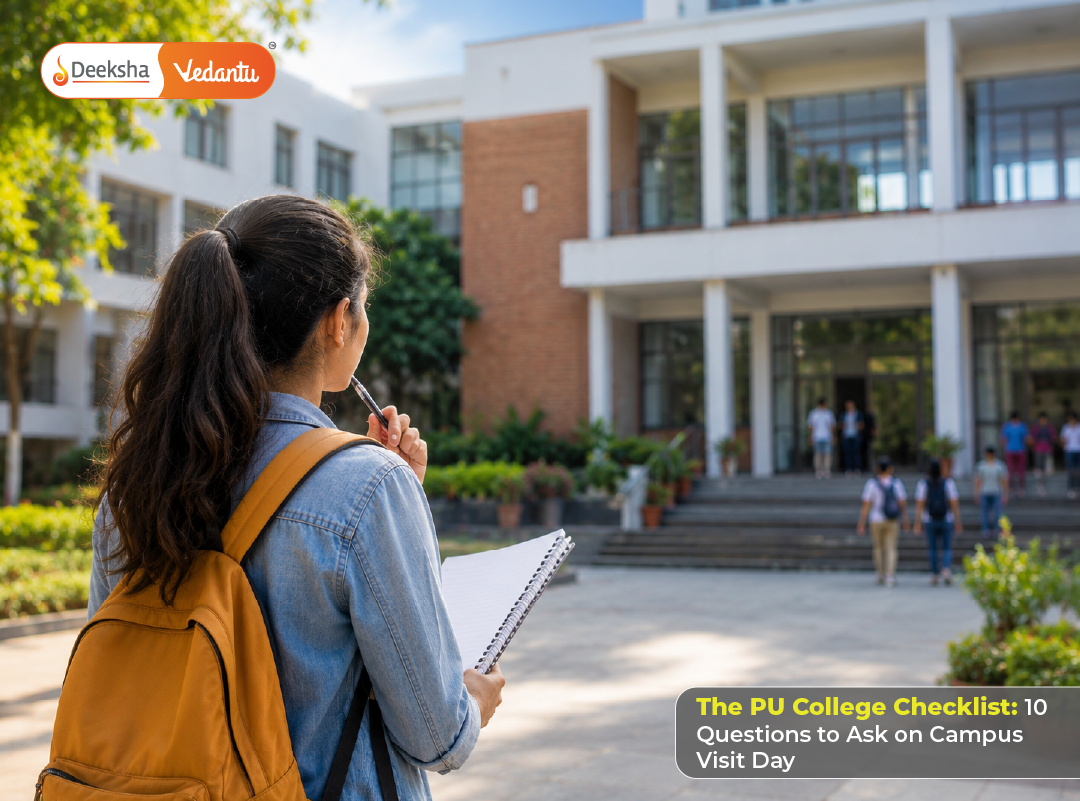
Most campus visits follow the same script: a guided walk past a few classrooms, a glance at the hostel if there is one, a brochure handed over at the end, and a vague sense of “it seemed fine.” That vague sense is exactly what gets families into a college that looks good on the day but doesn’t hold up six months in. This isn’t a list to read before you go – it’s a guide to carry with you, stop by stop, asking a specific question at the exact physical location where the answer actually means something.
Stop 1: The Entrance Gate
The question: “Is this a genuinely independent PU college, or is it tied to a coaching institute that’s really running the show?”
Why here: Karnataka has specifically cracked down on “dummy” PU colleges – institutions that exist on paper mainly to satisfy board affiliation requirements while the real academic activity happens at a separate coaching center. This is the first thing worth confirming, before you’re even inside, since it determines whether everything you see afterward reflects genuine day-to-day academics or a facility that exists mostly for enrollment purposes.
Stop 2: The Reception or Admissions Desk
The question: “Can I get an itemized, written fee breakdown right now, not just the headline number?”
Why here: This is the moment before any rapport has been built, before a campus tour has made you feel invested – exactly when a straight, complete answer is most telling. A college that hands over a clear written breakdown immediately is signaling genuine transparency; one that deflects to “we’ll discuss that later” is worth noting as a pattern, not a formality.
Stop 3: An Actual, Currently-Running Classroom
The question: “Can I observe an ongoing class, unannounced, rather than one specifically arranged for visit day?”
Why here: Prepared, visit-day-only classroom demonstrations look different from ordinary daily teaching – more energy, more polish, sometimes even different students seated in for the occasion. Asking to see a genuinely unscheduled, in-progress class is a reasonable request, and a college confident in its everyday teaching quality generally won’t resist it.
Stop 4: The Laboratory (For Science Stream)
The question: “How often do students actually get individual, hands-on lab time, versus watching a demonstration?”
Why here: A well-equipped lab that’s rarely used for genuine individual practical work isn’t meaningfully different from no lab at all, for a student’s actual learning. Standing in the lab itself is the right moment to ask about usage frequency specifically, since equipment quality alone doesn’t tell you how often it’s genuinely in students’ hands.
Stop 5: The Library or Study Hall
The question: “What are the actual, enforced hours this space is accessible to students, not the hours listed on paper?”
Why here: Library hours printed in a brochure and library hours a student can genuinely rely on are sometimes two different things – worth asking current students directly, if any are present, rather than relying solely on staff description.
Stop 6: The Faculty Staff Room or a Specific Teacher
The question: “What’s your specific background – years teaching this exact subject, and any relevant coaching or professional credentials?”
Why here: Meeting an actual teacher, even briefly, tells you more than any faculty list in a brochure. Specific, confidently-answered questions about background and experience are a good sign; vague or redirected answers are worth noting.
Stop 7: The Notice Board or Results Display
The question: “Are these displayed results verified and dated, or could they be cumulative across many years, making the program look stronger than a recent, single-year snapshot would show?”
Why here: Results boards often display top achievers across several years combined, without always making the timeframe obvious. Standing directly in front of the board is the right place to ask specifically about the most recent single year’s numbers, not the multi-year highlight reel.
Stop 8: The Hostel Common Area (If Residential)
The question: “Can I see an actual student room, not the model room used for tours?”
Why here: Many residential facilities maintain one polished “showcase” room for visits, genuinely different from the rooms students actually live in day to day. Asking specifically to see an occupied, lived-in room – even briefly – is a fair and reasonable request that reveals considerably more than a staged one ever will.
Stop 9: The Cafeteria or Dining Hall
The question: “Can I see today’s actual meal, and speak briefly with a student eating it?”
Why here: Food quality is one of the most common sources of quiet, unaddressed dissatisfaction in residential settings, and it rarely shows up clearly in a brochure. A short, informal conversation with an actual student here often surfaces more honest feedback than any official answer will.
Stop 10: On Your Way Out, With a Current Student Alone
The question: “If you could change one thing about this college, what would it be?”
Why here: This is deliberately the last stop, ideally out of earshot of staff, because it’s the one moment in the entire visit where an honest, unfiltered answer is most likely. Every college has something a real student would change – the specific answer here often reveals more about actual daily life than the entire rest of the tour combined.
The Full Walkthrough, at a Glance
| Stop | Question | What It Reveals |
| Entrance gate | Independent college, or dummy for a coaching brand? | Genuine academic structure vs. paper affiliation |
| Admissions desk | Written, itemized fee breakdown now? | Transparency, before rapport is built |
| Live classroom | Unannounced observation possible? | Everyday teaching quality, not staged quality |
| Laboratory | Actual individual hands-on time? | Real practical learning vs. equipment on display |
| Library/study hall | Actual enforced hours? | Reliability of access, not just brochure claims |
| Faculty room | Specific background and credentials? | Genuine teaching depth vs. vague reassurance |
| Results board | Single-year, dated results? | Real recent performance vs. cumulative highlight reel |
| Hostel room | An actual lived-in room? | Real daily living conditions |
| Cafeteria | Today’s real meal, a student’s honest take? | Quality of daily life, not brochure photos |
| Alone with a student | What would you change? | The most honest answer of the entire visit |
Why This Order Matters
Notice that the hardest, most revealing question is saved for last, once trust has built naturally through the visit rather than being asked cold at the start. This sequencing isn’t accidental – it mirrors how genuine information actually surfaces during any campus visit, and it’s exactly why a scripted, topic-ordered checklist read the night before tends to produce weaker answers than the same questions asked at the specific physical moment they make sense.
For families weighing a residential option specifically, this walkthrough pairs directly with the deeper questions covered in what residential PU brochures don’t tell you, and once the visit is complete, comparing the fee breakdown gathered at Stop 2 against what to actually expect in PU college fees will confirm whether the numbers you were given hold up against realistic tier-by-tier benchmarks.
Frequently Asked Questions
Is it reasonable to ask to speak with a current student privately, without staff present?
Yes – a confident, well-run college generally has nothing to hide from this request, and hesitation or resistance to it is itself useful information worth noting.
Should all 10 questions be asked in a single visit, or spread across multiple visits?
A single, well-planned visit can cover all 10 if time allows, but a second visit – ideally unannounced, if the college permits it – often reveals a genuinely different, more ordinary picture than a single scheduled tour ever will.
What if a college simply doesn’t allow some of these requests, like unannounced classroom observation?
That’s meaningful information in itself – a reasonable, confident institution will generally accommodate most of these requests in some form, and a pattern of refusal across several of them is worth weighing seriously against the visit’s overall positive impression.
A campus visit was never meant to be a passive tour – it’s the one chance to gather information a brochure will never volunteer. Ask each question at its specific stop, save the honest one for last, and what you walk away with will look considerably more real than what you walked in expecting.












Get Social