
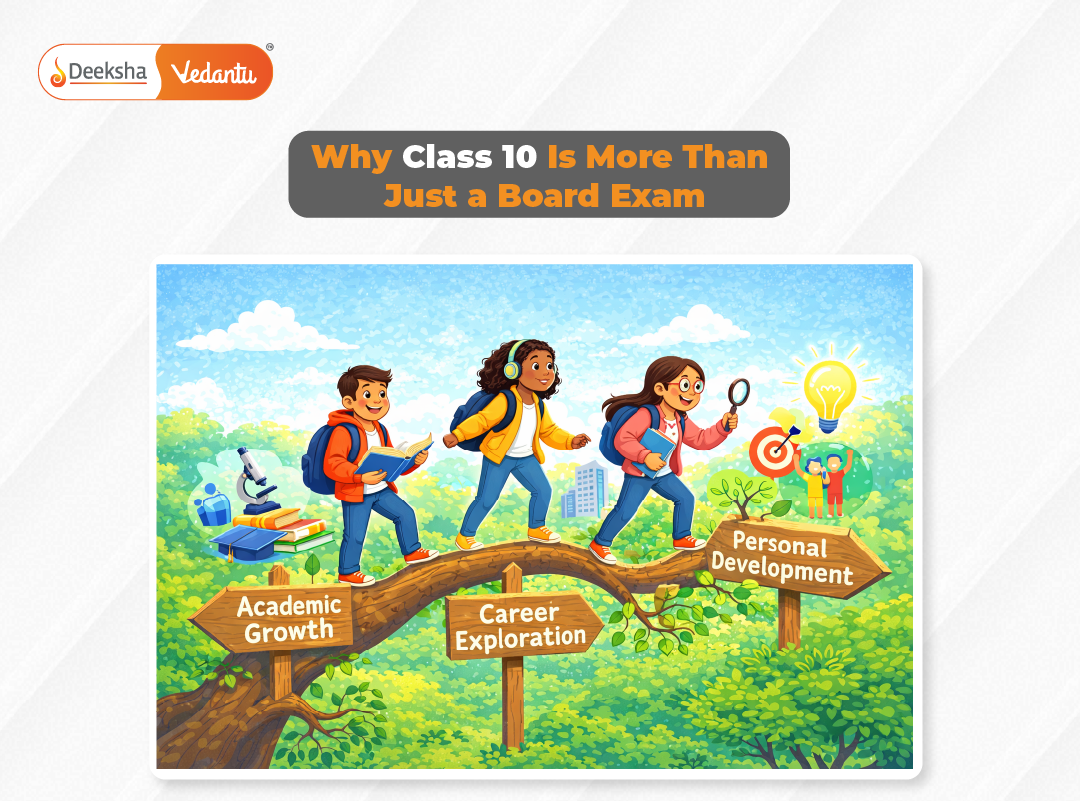
Class 10 is more than a board examination milestone. It is the stage where students begin shaping their academic direction, skill foundation, and long-term career readiness. In the 2026–2036 decade, careers will be driven by technology integration, interdisciplinary thinking, automation, global collaboration, data-driven decision-making, and continuous upskilling.
The world students enter after school will look significantly different from today’s job market. Many careers will evolve. Some roles will disappear. Entirely new industries will emerge around artificial intelligence, green energy, biotechnology, digital finance, space research, climate analytics, cybersecurity, and human-centered design.
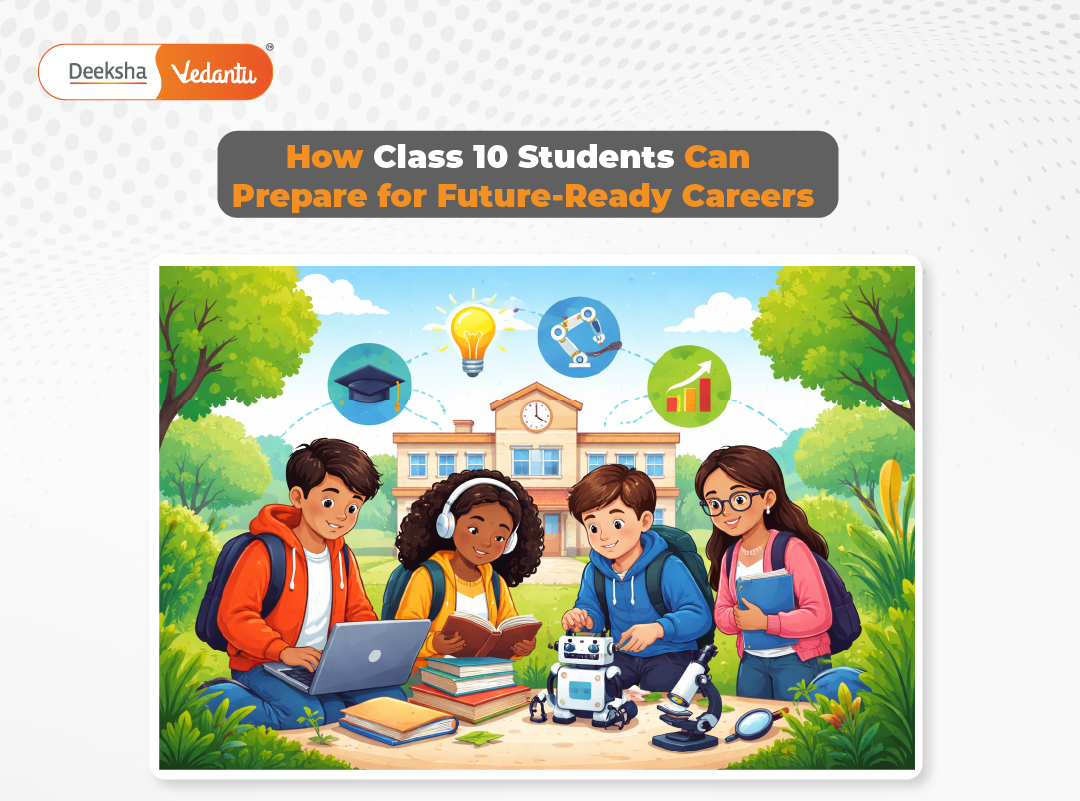
Preparing for future-ready careers does not mean locking into a profession at age 15. It means building strong academic foundations, cultivating adaptable skills, strengthening digital comfort, and developing the mental resilience required to grow across multiple career phases.
This expanded guide explains how Class 10 students can strategically prepare for careers that may evolve dramatically over the next 10 years and how early decisions influence long-term opportunities.
Understanding What “Future-Ready” Really Means
Future-ready careers are not defined by a single degree or stream. They are defined by adaptability.
In 2026 and beyond, future-ready professionals demonstrate:
- Strong analytical reasoning
- Comfort with technology and data
- Interdisciplinary thinking ability
- Communication clarity
- Emotional resilience
- Lifelong learning habits
Future readiness is less about job titles and more about skill depth, intellectual flexibility, and the ability to learn faster than change itself.
Students who build thinking strength in Class 10 position themselves for smoother academic transitions and better professional adaptability between 2026 and 2036.
1. Build Strong Academic Foundations
No career preparation strategy works without academic strength.
Regardless of stream selection, conceptual clarity in core subjects is essential.
Class 10 students should focus on:
- Deep understanding of Mathematics concepts, not memorization of steps
- Application-based Science learning rather than rote recall
- Clear writing and structured answers in Languages
- Analytical reasoning and interpretation in Social Science
Strong academic foundations improve:
- Confidence in Class 11 and 12
- Competitive exam readiness
- Subject flexibility during stream selection
- Long-term comprehension ability
Academic consistency is the first pillar of career readiness.
Students who struggle with fundamentals often face compounding difficulty in higher education.
2. Strengthen Core Transferable Skills
Future careers demand transferable skills that apply across industries.
| Skill | Why It Matters (2026–2036) | How to Develop in Class 10 |
| Analytical Thinking | Required in tech, finance, research | Solve case-based and higher-order questions |
| Communication | Needed for leadership & collaboration | Practice structured writing & presentations |
| Digital Literacy | Essential in all industries | Learn productivity tools & basic coding |
| Adaptability | Careers evolve rapidly | Explore new learning platforms |
| Time Management | Ensures sustainable growth | Maintain disciplined weekly schedules |
| Emotional Intelligence | Supports resilience | Practice stress management habits |
| Research Skills | Important in academia & industry | Work on small projects & assignments deeply |
| Decision-Making | Needed in leadership roles | Analyze pros & cons before choices |
Skill depth differentiates future leaders from average performers.
Students who build these skills early gain long-term confidence advantages.
3. Develop Digital and Technological Comfort
Technology will touch nearly every profession by 2036.
Students should gradually build comfort with:
- Spreadsheets and data interpretation
- Presentation tools
- Responsible AI usage
- Basic coding logic
- Online research verification
- Cyber hygiene and digital safety
Digital literacy does not require advanced programming expertise in Class 10. It requires familiarity, curiosity, and comfort.
Students who fear technology often hesitate in higher education and corporate environments.
Digital confidence builds adaptability.
4. Explore Career Awareness Early
Future-ready preparation includes awareness without pressure.
Students can:
- Research emerging industries
- Watch structured career interviews
- Understand educational pathways
- Explore interdisciplinary professions
- Identify subjects they genuinely enjoy
Examples of interdisciplinary growth fields include:
- Data Science combining Mathematics and programming
- Environmental Law combining Science and public policy
- FinTech combining Commerce and technology
- Sports Analytics combining statistics and performance science
- Health Informatics combining Biology and digital systems
Career exploration reduces confusion and regret during stream selection.
Informed awareness supports better long-term decisions.
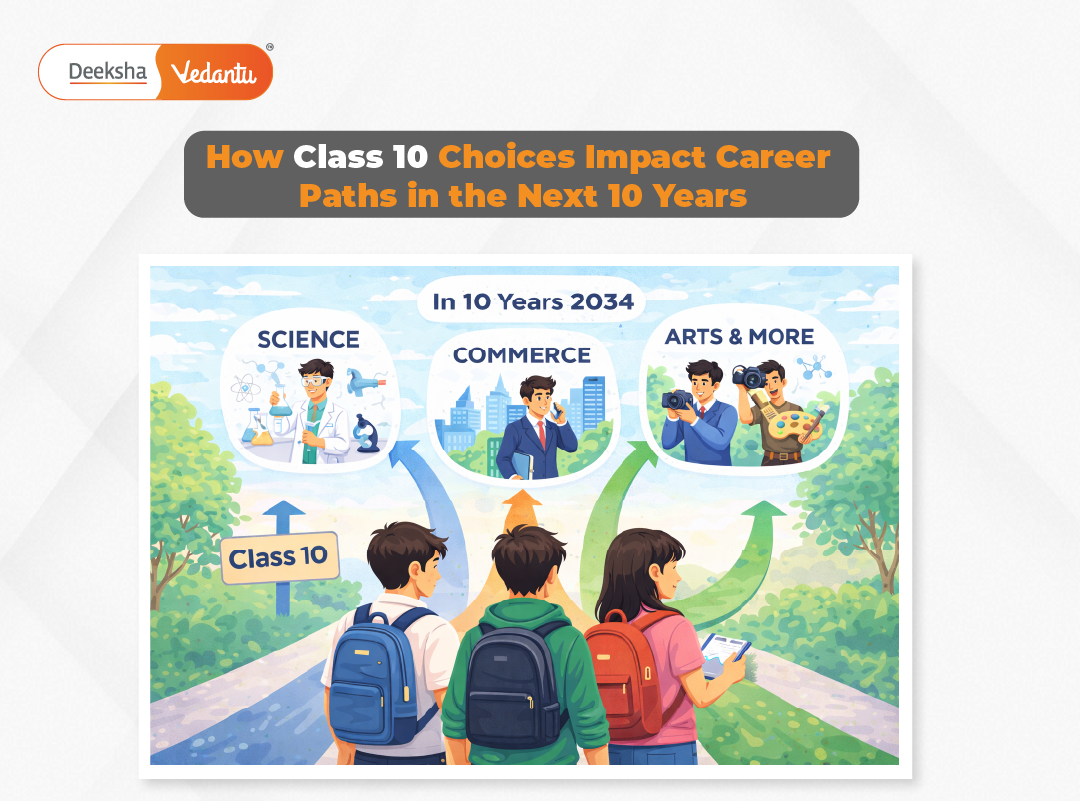
5. Choose Stream Strategically After Class 10
Stream selection influences eligibility for certain professional paths.
| Stream | Strength Areas | Long-Term Career Directions |
| Science | Analytical & technical depth | Engineering, Medicine, AI, Research, Robotics |
| Commerce | Financial & business reasoning | Finance, Management, Entrepreneurship, Economics |
| Humanities | Critical thinking & policy understanding | Law, Civil Services, Psychology, Policy Research |
Future-ready preparation means choosing based on aptitude, interest, and sustainability – not social comparison.
The right stream is the one where consistent effort feels manageable, not overwhelming.
6. Balance Academic Rigor with Well-Being
Future-ready careers require long-term stamina.
Students must learn to:
- Avoid burnout
- Protect sleep cycles
- Maintain physical fitness
- Preserve creative hobbies
- Seek academic help when confused
Sustainable discipline outperforms short bursts of extreme intensity.
Mental health stability supports cognitive growth.
Students who manage stress effectively perform consistently over years.
7. Practice Real-World Application
Future careers reward application and execution.
Students can:
- Participate in science exhibitions
- Join debates, quizzes, or Model UN events
- Work on small coding or research projects
- Engage in mock financial simulations
- Volunteer for leadership roles in school activities
Application builds confidence and reduces fear of practical problem-solving.
Real-world exposure bridges academic theory and professional thinking.
8. Build Learning Agility for the Next 10 Years
The most important preparation strategy is learning how to learn.
| Phase | Focus for Students |
| Class 10 | Concept clarity & disciplined habits |
| Class 11–12 | Specialization depth & competitive alignment |
| Undergraduate | Skill enhancement & internships |
| Early Career | Continuous upskilling & adaptability |
Students who develop structured study routines and curiosity-driven exploration remain competitive even as industries transform.
Learning agility reduces fear of change.
9. Understand Interdisciplinary Career Growth
High-growth careers combine multiple domains.
| Career Field | Interdisciplinary Combination |
| Data Science | Mathematics + Coding + Business |
| Health Informatics | Biology + Technology |
| Climate Policy | Environmental Science + Law |
| Digital Marketing | Analytics + Psychology |
| FinTech | Finance + AI + Data Analytics |
| UX Design | Psychology + Technology + Creativity |
Future-ready students think across subjects rather than in isolation.
Interdisciplinary thinking increases long-term employability.
10. Maintain Long-Term Perspective
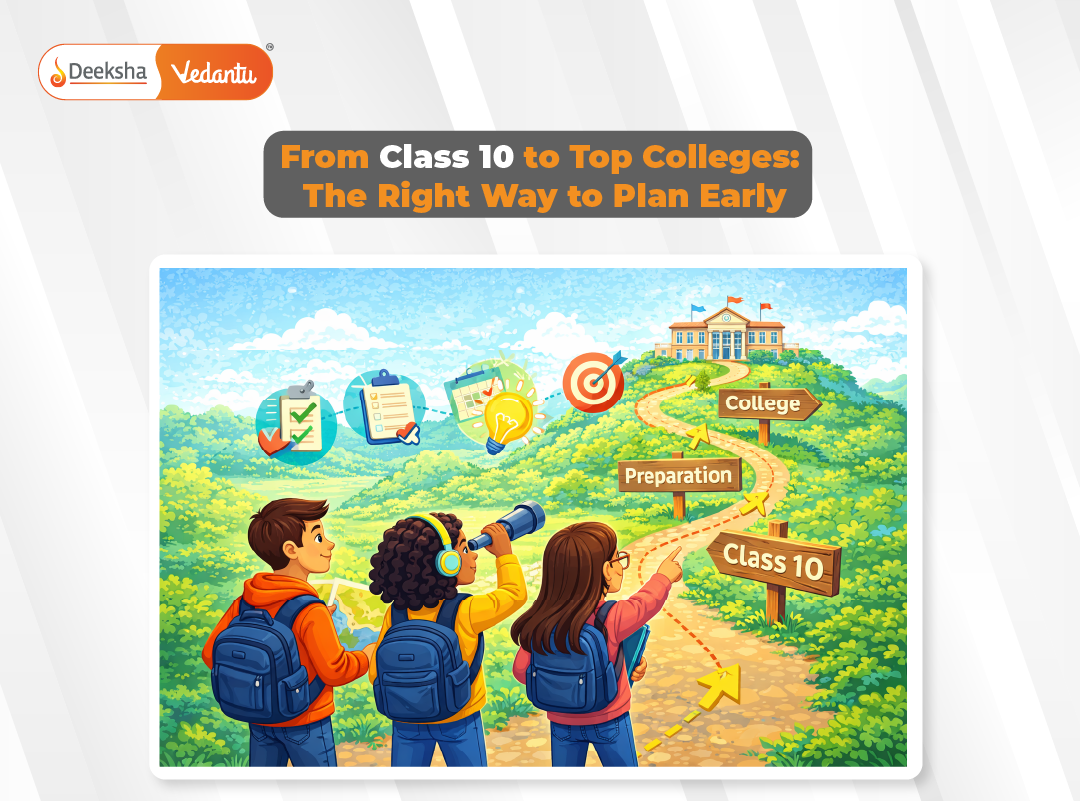
Career preparation is a decade-long journey.
| Years After Class 10 | Key Focus |
| 0–2 Years | Academic foundation & stream alignment |
| 3–6 Years | Degree specialization & skill depth |
| 7–10 Years | Industry positioning & expertise |
Class 10 decisions influence trajectory but do not permanently fix destiny.
Students who think long-term reduce the cost of frequent stream or degree switches later.
Career Readiness Self-Assessment Matrix
Students can periodically evaluate their preparedness using the following matrix:
| Dimension | Strong (Score 3) | Moderate (Score 2) | Needs Improvement (Score 1) |
| Academic Consistency | Regular revision & clarity | Occasional gaps | Frequent confusion |
| Analytical Thinking | Comfortable solving new problems | Needs hints | Avoids difficult questions |
| Digital Comfort | Uses tools confidently | Basic familiarity | Hesitant with tech |
| Communication | Expresses ideas clearly | Some hesitation | Struggles to articulate |
| Time Management | Follows structured routine | Inconsistent schedule | Frequent procrastination |
| Emotional Stability | Handles pressure calmly | Occasional stress spikes | Easily overwhelmed |
| Career Awareness | Explored multiple pathways | Limited research | No exposure yet |
Students scoring mostly 2s and 3s are on a strong path toward future readiness. Areas with 1s require focused improvement rather than panic.
Self-assessment builds awareness without comparison pressure.
FAQs
Q1. Should Class 10 students finalize their career in 2026?
No. They should focus on building strong foundations and exploring interests rather than finalizing a lifelong profession.
Q2. Is stream selection the most important decision for future careers?
It is important, but skill development, adaptability, and consistent academic performance matter even more.
Q3. Do students need advanced coding skills to be future-ready?
Not necessarily. Foundational digital literacy and logical thinking are more important at this stage.
Q4. How can students prepare for careers that may not exist yet?
By building adaptable skills such as analytical reasoning, communication clarity, technological comfort, and continuous learning habits.
Q5. What is the biggest mistake students make in Class 10 regarding career planning?
Focusing only on marks while ignoring skill development, digital literacy, and long-term growth perspective.
Conclusion
Preparing for future-ready careers in 2026 and beyond is not about early specialization or pressure-driven decisions. It is about strengthening academic foundations, building transferable skills, developing digital comfort, cultivating emotional resilience, and thinking long-term.
Class 10 students who combine discipline with curiosity create a powerful advantage for the next decade.
The careers of 2036 will reward those who are adaptable, analytical, emotionally stable, and ready to learn continuously – and that preparation begins in Class 10.


Get Social