
Many students dream of entering top colleges in India and abroad. However, very few understand that the journey toward those institutions does not begin in Class 12 – it begins in Class 10.
In the 2026–2036 academic landscape, college admissions are becoming more competitive, holistic, data-driven, and skill-oriented. Strong marks alone are not enough. Structured preparation, stream clarity, competitive alignment, profile development, emotional resilience, and consistent execution all play crucial roles.
Class 10 is the foundation year where early, strategic planning can create long-term academic advantage.
At Deeksha Vedantu, this transition from Class 10 to higher academic pathways is treated as a structured roadmap rather than a last-minute decision. The emphasis is on building systems early so that pressure reduces later.
Early clarity compounds. Late clarity compresses.
1. Understanding What “Top Colleges” Really Look For
Top colleges evaluate students using multi-dimensional criteria. While entrance exam scores remain critical, institutions increasingly assess overall academic trajectory.
Top institutions typically look for:
- Strong academic consistency across years
- Conceptual clarity in core subjects
- Competitive exam performance
- Profile strength (projects, leadership, competitions)
- Communication and analytical ability
- Long-term commitment toward chosen field
Students who begin planning early align their efforts across these dimensions instead of focusing only on board percentages.
Early planning reduces randomness and increases direction.
2. Step One: Build a Strong Class 10 Academic Foundation
The first milestone toward top colleges is strong Class 10 performance.
Class 10 marks influence:
- Stream eligibility
- Confidence entering Class 11
- Foundation strength in core subjects
- Competitive preparation readiness
- Academic credibility
Students should prioritize:
- Concept clarity over rote memorization
- Time-bound writing practice
- Regular revision cycles
- Error analysis and correction
- Strengthening weak chapters early
At Deeksha Vedantu, board-focused preparation integrates analytical depth, ensuring students build both performance accuracy and reasoning strength.
Class 10 is where academic credibility begins.
Without a strong base, later preparation becomes reactive rather than strategic.
3. Step Two: Choose the Right Stream Strategically
Stream selection in Class 11 directly impacts eligibility for top colleges.
| Stream | Typical Competitive Alignment | Top College Pathways |
| Science (PCM) | JEE, Engineering Entrances | IITs, NITs, Top Private Engineering Colleges |
| Science (PCB) | NEET, Medical Entrances | AIIMS, Top Medical Colleges |
| Commerce | CA, CUET, IPMAT | SRCC, IIM Indore (IPM), Top Commerce Colleges |
| Humanities | CUET, CLAT | Top Law Schools, DU Humanities Colleges |
Students must evaluate aptitude, interest, performance trend, and sustainability before choosing a stream.
Planning early allows students to select subjects aligned with long-term college goals rather than social expectations or peer pressure.
Stream alignment reduces the cost of switching later.
4. Step Three: Align Early with Competitive Exams
Top colleges in India primarily admit students through competitive examinations.
Students aiming high must:
- Understand exam patterns early
- Strengthen conceptual base in Classes 10 and 11
- Develop speed and accuracy
- Practice higher-order thinking questions
- Build test-taking endurance
Competitive alignment ideally becomes intensive in Class 11, but conceptual groundwork begins in Class 10.
Students who ignore conceptual clarity in Class 10 often spend Class 11 correcting basics instead of advancing.
At Deeksha Vedantu, competitive integration is introduced gradually, ensuring students are prepared without academic overload.
Early exposure reduces future shock.
5. Step Four: Develop Academic Profile Strength
While entrance exams dominate Indian admissions, holistic evaluation is growing in importance, especially for private institutions and international pathways.
Students should gradually build:
- Participation in academic competitions
- Olympiad exposure
- Project-based learning experience
- Communication confidence
- Leadership roles in school initiatives
- Internship or shadowing experiences (where applicable)
Profile strength differentiates candidates with similar marks.
Students who build consistent portfolios across Classes 10–12 stand out naturally.
6. Step Five: Build Study Systems, Not Just Study Hours
Students aiming for top colleges must focus on efficiency rather than raw study time.
| Study Approach | Short-Term Impact | Long-Term Impact |
| Random study | Temporary performance spikes | Inconsistent results |
| Structured schedule | Stable board marks | Competitive readiness |
| Concept mastery | Strong exam writing | Advanced analytical strength |
| Regular testing | Performance tracking | Confidence under pressure |
| Strategic revision | Reduced forgetting | Rank improvement potential |
Class 10 is the ideal stage to build systematic study habits.
Systems reduce anxiety, increase retention, and improve long-term output.
7. Step Six: Strengthen Core Skills Alongside Academics
Top colleges and future careers value skills such as:
- Analytical reasoning
- Communication clarity
- Logical decision-making
- Time management
- Digital literacy
- Emotional resilience
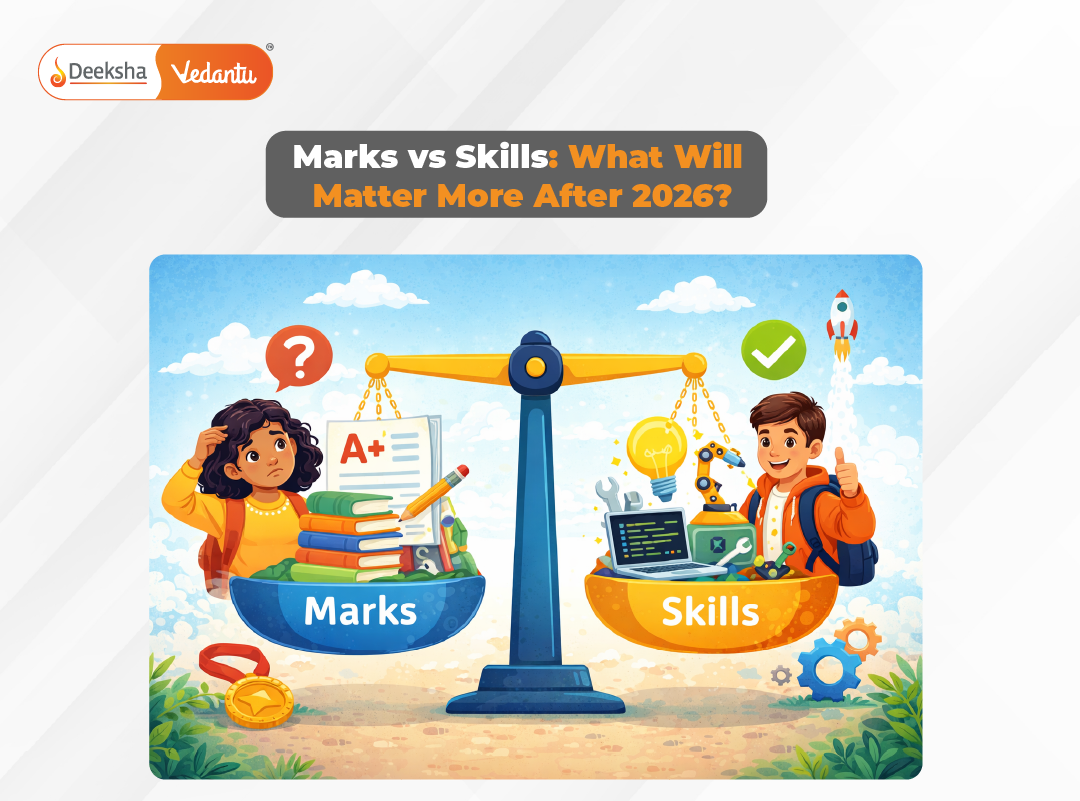
Marks may open doors.
Skills determine performance after entry.
At Deeksha Vedantu, emphasis is placed on conceptual strength, structured mentorship, and disciplined preparation that supports both marks and skill development.
Balanced growth increases admission probability.
8. A 6-Year Roadmap: From Class 10 to Top College Admission
| Academic Phase | Primary Focus | Strategic Objective |
| Class 10 | Board foundation & discipline | Stream flexibility |
| Class 11 | Concept depth & exam alignment | Competitive readiness |
| Class 12 | Exam execution & revision mastery | High rank performance |
| Gap Year (if required) | Advanced preparation | Rank improvement |
| Undergraduate Entry | Academic consistency | College performance |
Students who think in multi-year frameworks outperform those who begin planning in Class 12.
Strategic patience often outperforms last-minute intensity.
9. Common Planning Mistakes That Reduce Admission Probability
Students often make avoidable errors such as:
- Choosing streams based on peer influence
- Ignoring conceptual gaps in Class 10
- Delaying competitive exam awareness
- Overloading extracurriculars without direction
- Studying without structured testing
- Avoiding performance analysis
Each of these reduces admission probability over time.
Early correction increases cumulative advantage.
10. Top College Admission Probability Model (Academic + Skill Weightage)
Admission into top colleges can be viewed through a weighted model of performance indicators.
| Component | Weightage (Approx.) | Class 10 Role | Long-Term Influence |
| Board Performance | 20% | Foundation credibility | Stream & academic confidence |
| Competitive Exam Score | 40% | Concept base formation | Primary admission filter |
| Conceptual Depth | 15% | Built in Class 10 & 11 | Rank differentiation |
| Profile Strength | 10% | Early exposure opportunities | Holistic advantage |
| Communication & Interview Skills | 5% | Habit formation stage | Final selection edge |
| Consistency Across Years | 10% | Discipline system begins | Trust factor for institutions |
While competitive exam performance often carries the highest weightage, it is strengthened by early academic discipline and skill integration.
Students who treat Class 10 casually weaken multiple components simultaneously.
Students who treat it strategically strengthen all layers.
Class 10 to Top Colleges: Strategic Alignment Table
| Planning Element | If Started in Class 10 | If Delayed to Class 12 |
| Concept Clarity | Strong foundation | Patchwork learning |
| Competitive Awareness | Gradual build-up | High pressure rush |
| Stream Selection | Informed decision | Limited correction scope |
| Confidence Level | Stable growth | Anxiety spikes |
| College Options | Broader flexibility | Narrowed choices |
| Admission Probability | Higher cumulative growth | Compressed opportunity |
Early planning reduces pressure later and improves probability of top-tier admissions.
11. How Deeksha Vedantu Supports Early Strategic Planning
At Deeksha Vedantu, the transition from Class 10 to higher academic stages is supported through:
- Structured academic mapping
- Stream guidance frameworks
- Competitive alignment preparation
- Regular performance tracking
- Mentorship-driven academic planning
- Analytical skill-building systems
The goal is not just high board scores, but long-term academic direction and admission readiness.
Students are guided to think strategically rather than react emotionally to results.
FAQs
Q1. Is it too early to think about top colleges in Class 10?
No. Planning does not mean pressure. It means building foundations early so that pressure reduces later.
Q2. Do Class 10 marks affect top college admissions directly?
They influence stream eligibility and foundational strength, which indirectly affect future entrance performance.
Q3. Should students start competitive preparation in Class 10?
Conceptual strengthening should begin in Class 10. Intensive preparation typically begins in Class 11.
Q4. How can students avoid burnout while planning early?
Through structured routines, balanced schedules, mentorship support, and gradual skill-building.
Q5. How does Deeksha Vedantu help students aim for top colleges?
By integrating board excellence, competitive alignment, structured mentorship, and long-term academic planning within a disciplined ecosystem.
Conclusion
Reaching top colleges is not a last-year effort. It is the outcome of consistent, structured planning that begins in Class 10.
Students who build strong academic foundations, choose streams wisely, align early with competitive exams, strengthen skills, and maintain discipline create compounding advantages over time.
When guided within structured frameworks like Deeksha Vedantu, Class 10 becomes the starting point of a clear, confident, and strategic journey toward top college success.
Early planning is not about pressure. It is about preparation.
And preparation, when started in Class 10, transforms ambition into achievable reality.








Get Social