
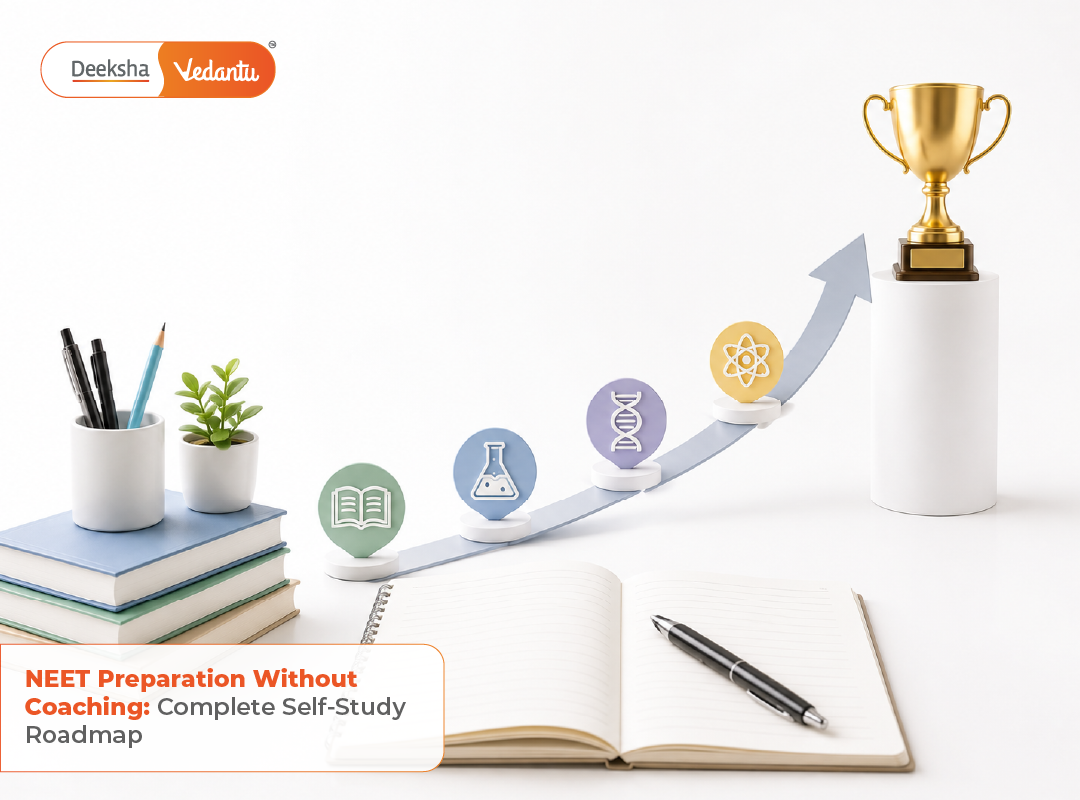
Every year, coaching institutes across India advertise astronomical success rates and parade their toppers like trophies. This creates a narrative: you cannot crack NEET without joining a coaching center. But here’s a fact that contradicts this entire marketing machine-many successful NEET candidates have proved that with a disciplined self-study plan and the right resources, NEET preparation at home without coaching is entirely achievable. The question isn’t whether self-study works. The question is whether you have the discipline and strategic thinking required to make it work.
This comprehensive guide provides an honest roadmap for NEET exam self-preparation, including the advantages you gain, the challenges you’ll face, resources you actually need, and a realistic timeline that doesn’t promise miracles but delivers results if you execute properly.
Why Self-Study Works for NEET (Unlike Many Other Competitive Exams)
NEET is fundamentally different from exams like JEE Advanced or UPSC. Those exams test problem-solving creativity and multidimensional analytical thinking. NEET, despite being competitive, tests structured knowledge application from a fixed syllabus-specifically, NCERT Class 11 and 12 for Physics, Chemistry, and Biology. The syllabus doesn’t change mysteriously. The pattern remains consistent. Previous year papers reveal clear trends. This predictability is exactly why self-study is viable.
The advantages of self-preparation go beyond just saving coaching fees. You control your pace entirely. If Human Physiology takes you three weeks to master instead of the coaching center’s prescribed ten days, that’s fine. You own your schedule. You aren’t forced to sit through a two-hour lecture on a topic you already understand just because the batch needs uniformity. You can allocate more time to your weak subjects without guilt. If your Chemistry is strong but Physics needs work, spend four hours daily on Physics and two on Chemistry without anyone questioning your ratio.
You develop genuine self-reliance and problem-solving instincts. When you don’t have a teacher to immediately clarify doubts, you learn to find answers yourself through NCERT re-reading, YouTube explanations, or online forums. This builds a deeper understanding because you had to struggle to reach the answer rather than receiving it passively in a classroom. This self-sufficiency becomes invaluable during the actual NEET exam when no teacher can help you.
The challenges are real, however. The biggest obstacle isn’t lack of teachers-it’s lack of structure and accountability. Coaching provides external discipline. You show up at 8 AM whether you feel like it or not. You complete assignments because someone checks them. You take tests on schedule because the batch takes them together. Self-study removes all these external forcing functions. Your discipline must be internally generated, which is significantly harder.
The second challenge is doubt resolution. When you’re stuck on why a particular Organic Chemistry reaction proceeds through one mechanism instead of another, a teacher can clarify in five minutes. On your own, you might spend thirty minutes searching YouTube videos or reading multiple explanations before understanding. This time cost adds up across thousands of concepts. The third challenge is feedback absence. Coaching institutes provide regular tests with percentile rankings, showing you exactly where you stand relative to other aspirants. Self-study requires you to create your own benchmarking system.
The Two Non-Negotiables: Resources and Routine
Your resource selection determines 50% of your success. NCERT textbooks are mandatory and primary-not supplementary. For Biology and Inorganic Chemistry, NCERT is literally the syllabus. Approximately 80% of Biology questions and 70% of Inorganic Chemistry questions are direct or near-direct lifts from NCERT. Do not make the mistake of treating NCERT as basic and jumping to reference books. Every line in NCERT Biology, every diagram caption, every NCERT exercise question, every footnote-read them all, multiple times.
For Physics, start with NCERT for concepts, then move to HC Verma’s Concepts of Physics for problem-solving depth. NEET Physics questions require understanding and application, not just formula memorization. HC Verma builds that understanding through progressive problem difficulty. For numerical practice, DC Pandey or Pradeep’s Physics works well. But only after NCERT concepts are clear.
For Chemistry, the approach varies by section. Physical Chemistry needs NCERT concepts followed by numerical practice from OP Tandon or Narendra Awasthi. Organic Chemistry requires NCERT plus MS Chouhan for reaction mechanisms and conversion problems. Inorganic Chemistry is NCERT-only initially, supplemented by Trueman’s for additional factual depth only after NCERT mastery.
For Biology, NCERT is sufficient for 90% of preparation. Once you’ve read NCERT four to five times, then Trueman’s Biology or GRB Bathla provides additional MCQs for practice. But never replace NCERT with these books. They supplement, they don’t substitute.
Previous year papers from 2019-2026 are your most valuable resource after NCERT. Solve all of them, analyze every question, understand why each wrong option is wrong, not just why the right option is correct. These papers reveal NEET’s question patterns, difficulty level, and exactly which NCERT portions get tested repeatedly.
Online resources are abundant but overwhelming. YouTube channels like Khan Academy for biological processes, Unacademy’s free NEET content, or BYJU’s explanatory videos can help when concepts aren’t clicking through reading alone. The key is using these for concept clarification, not as primary learning sources. Watch a fifteen-minute video to understand a confusing topic, then return to NCERT. Don’t replace reading with passive video watching.
Your daily routine must be non-negotiable. Self-study fails when routine becomes flexible. “I’ll study eight hours today” without defining when those eight hours occur inevitably becomes six hours, then four, then two. Create a fixed schedule and follow it regardless of motivation levels.
A realistic self-study routine for Class 11 and early Class 12 looks like this: Morning session from 6:00 AM to 9:00 AM dedicated to Biology NCERT reading. Biology requires fresh mind for factual retention. Three uninterrupted hours every morning builds mastery over months. Mid-morning session from 9:30 AM to 12:30 PM for Physics theory and problem-solving. Your analytical thinking peaks mid-morning, making it ideal for Physics numericals. Afternoon session from 2:00 PM to 5:00 PM for Chemistry across all three sections. Chemistry requires a mix of memory and application, manageable in post-lunch hours. Evening session from 5:30 PM to 7:00 PM for practice MCQs mixing all three subjects. Solve 150-200 MCQs daily from previous year papers or online test series.
This gives you roughly 9-10 hours of study time daily, which is realistic for Class 11 students without board exam pressure. In Class 12, especially post-boards in February-March, increase to 10-12 hours by extending morning and evening sessions.
One day weekly must be complete rest. Self-study without weekly breaks leads to burnout faster than coaching because you have no forced breaks through commute time or social interaction with batchmates.
The Month-by-Month Self-Study Execution Plan
Assuming you’re starting in Class 11 (June 2025) and targeting NEET 2027, here’s the realistic execution timeline. The first three months from June to August 2025 focus exclusively on NCERT completion for all subjects. Don’t worry about speed. Don’t worry about retention yet. Just complete reading NCERT Class 11 Physics, Chemistry, and Biology thoroughly. Make notes of important concepts, formulas, and diagrams. This first reading should be slow and detailed, taking roughly 2.5 to 3 months. Your goal is familiarity, not mastery.
September to December 2025 shifts to Class 12 NCERT while simultaneously revising Class 11 once weekly. Complete Class 12 NCERT for all subjects by December end while ensuring Class 11 isn’t forgotten. Start solving NCERT exercise questions and previous year papers chapter-wise. This phase introduces you to question patterns.
January to March 2026 is your first complete revision cycle. Re-read entire NCERT for all subjects-both Class 11 and 12. This second reading will be faster because you’re now familiar. Simultaneously, start taking chapter-wise tests from online platforms. Identify your weak chapters clearly during this phase through test performance.
April to June 2026 requires focused weak-area strengthening. By now, you know which chapters you consistently struggle with. Dedicate extra time to these. If you’re weak in Rotational Motion in Physics, spend two weeks doing nothing but Rotational Motion problems until confidence builds. If Plant Physiology in Biology confuses you, read that section five times until clarity emerges.
July to September 2026 begins the mock test phase. Start with one full-length NEET mock test weekly. Analyze each test thoroughly. Track your score, accuracy percentage per subject, time spent per section, silly mistakes versus conceptual gaps. Create an error notebook documenting every mistake with reasons. Increase to two mocks weekly by September.
October to December 2026 intensifies mock test frequency to three per week while maintaining continuous revision. Your NCERT third reading should complete during this phase. By December, you should have attempted 25-30 full-length mocks and analyzed all of them meticulously.
January to March 2027 is Board exam balancing phase. Since NEET’s syllabus overlaps significantly with boards, use board preparation strategically. Solve NCERT exercises thoroughly for boards, which simultaneously serves NEET prep. Post boards in late February, shift completely to NEET mode.
April 2027 until NEET (early May) is final revision and mock marathon phase. Take one mock daily, analyze it, revise weak areas immediately. Complete NCERT fourth and fifth speed-reads. Review error notebook. Focus on maintaining accuracy, not learning new topics.
The Critical Success Factors
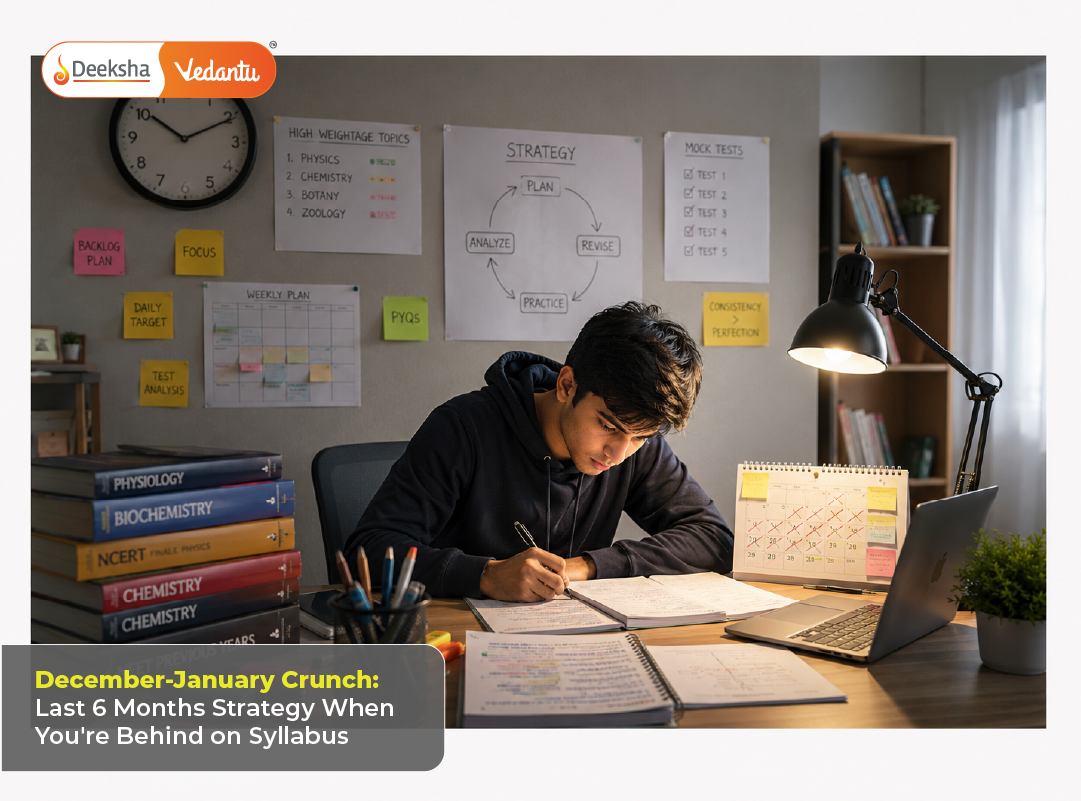
Several factors determine whether your self-study succeeds or fails. Self-accountability is paramount. Without external monitoring, you must track your own progress religiously. Maintain a preparation journal logging daily study hours, chapters completed, tests taken, and scores achieved. Review this weekly to ensure you’re on track.
Realistic goal-setting prevents demotivation. Don’t aim to complete one chapter daily if your understanding requires three days. Set achievable targets. Completing the syllabus in fifteen months with strong retention beats rushing through it in ten months with weak understanding.
Active doubt-resolution mechanisms are essential. Join online NEET preparation forums or Telegram groups where aspirants and educators answer doubts. Don’t let doubts accumulate. A doubt unresolved today becomes a concept gap that shows up months later during mocks.
Regular testing provides the feedback coaching students get naturally. Subscribe to online test series platforms. Take at least one test weekly from Month 7 onwards. Without regular testing, you won’t know if your preparation is effective until it’s too late.
Social isolation management matters. Self-study can feel lonely. Connect with other self-studying NEET aspirants online. Share strategies, discuss difficult concepts, motivate each other. This peer interaction prevents the isolation that often breaks self-study attempts.
When Self-Study Isn’t the Right Choice
Honesty about your suitability for self-study prevents wasted time. If you have extremely weak fundamentals in Science and Math from Class 9-10, self-study will be very difficult. You need basic understanding of concepts like atomic structure, chemical bonding, cell biology, and basic mechanics before NEET preparation begins. Without these foundations, self-teaching becomes nearly impossible.
If you lack self-discipline and require external structure to function, acknowledge this honestly. Some people genuinely need the external accountability of coaching. There’s no shame in this – it’s self-awareness. Attempting self-study when you know you need external structure wastes six months before you admit it isn’t working.
If your family environment doesn’t support focused study-constant distractions, no dedicated study space, or lack of family understanding about NEET’s demands-coaching provides a physical space away from these disruptions. Self-study from home requires a supportive environment.
Hybrid Options: The Middle Path
If pure self-study feels overwhelming but coaching is financially difficult, hybrid models exist. Deeksha Learning offers online NEET courses that provide structured syllabus coverage, recorded lectures, and test series while allowing you to study from home. You get expert guidance at a fraction of physical coaching costs. The online format gives you flexibility to replay lectures, study at your preferred times, while still benefiting from experienced faculty and doubt-clearing sessions.
Another hybrid approach uses coaching for your weakest subject only. If Biology and Chemistry are manageable through self-study but Physics consistently confuses you, join coaching specifically for Physics while self-studying other subjects. This targeted approach optimizes cost and benefit.
Visit Deeksha Learning’s flexible NEET preparation programs to explore online options that combine self-study benefits with structured guidance.
The Final Reality Check
Self-study for NEET works, but it works primarily for self-motivated students with decent existing foundations and strong discipline. It’s not easier than coaching-it’s different. You trade the external structure and peer competition of coaching for flexibility and self-reliance. Whether this trade benefits you depends entirely on your personality, discipline levels, and starting knowledge base.
Success in self-study isn’t about studying more hours than coaching students. It’s about studying strategically, maintaining consistency over intensity, using the right resources, and testing yourself regularly. If you commit to the roadmap outlined here, follow it religiously for eighteen months, and remain honest about your progress through regular testing, self-study can absolutely get you through NEET with strong scores. The question isn’t whether it can work. The question is whether you’ll make it work.











Get Social