
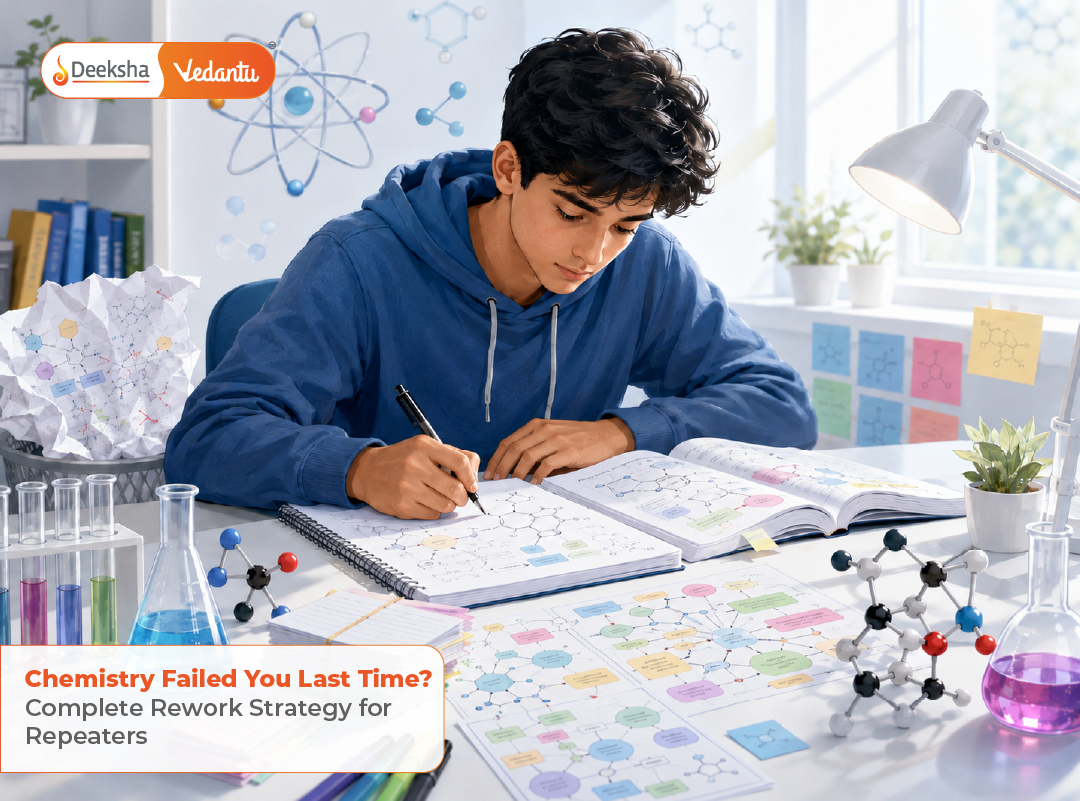

Chemistry has three personalities. You probably excelled at one, bombed at another, and stayed mediocre at the third. That’s why your Chemistry score feels disjointed-like you’re three different students.
This isn’t a generic “study harder” guide. This is the surgical breakdown of WHY Chemistry feels impossible, and the exact rework for repeaters.
The Chemistry Anatomy (Understanding What Actually Broke)
Organic Chemistry (45% of Chemistry questions)
- The Pattern: Memorization + Mechanism + Speed
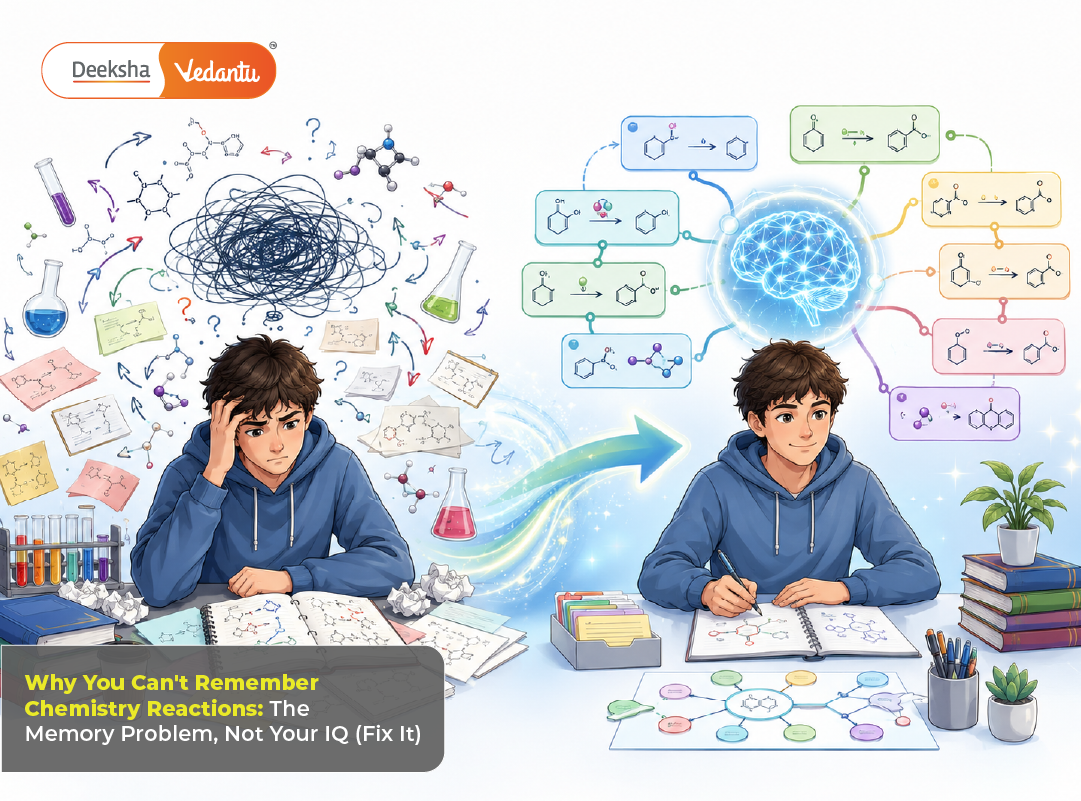
- Why It Breaks: You memorized reactions but can’t predict new ones
- NEET Testing: Not “What is esterification?” but “Predict the product of X under Y conditions”
- Your Score Likely: 25-40/60 (if weak)
Inorganic Chemistry (30% of Chemistry questions)
- The Pattern: Direct NCERT + Specific Facts + Trends
- Why It Breaks: You forgot “exceptions” (Boron doesn’t follow octet rule, etc.)
- NEET Testing: Mostly direct questions, some trick questions based on exceptions
- Your Score Likely: 30-45/54 (if weak)
Physical Chemistry (25% of Chemistry questions)
- The Pattern: Formula-heavy + Numerical + Speed
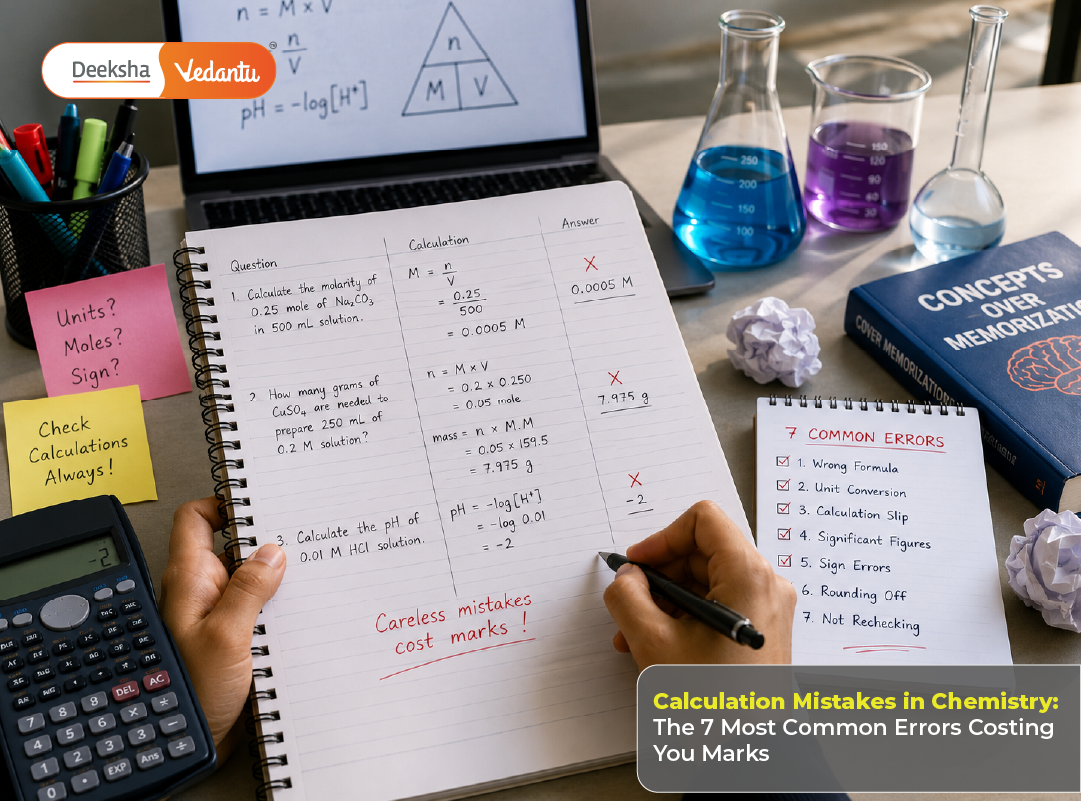
- Why It Breaks: You forgot formulas OR forgot to convert units OR made arithmetic errors
- NEET Testing: Pure calculation, time-pressure testing
- Your Score Likely: 15-30/36 (if weak)
Total Chemistry Score Weakness Pattern: You have 70-115/180 instead of 140+.
The Three Rework Strategies (Pick Your Weakest Subject)
If Organic Chemistry Is Your Weakness (Score: 25-40)
The Core Problem: You memorized “Benzene + Cl₂ → Chlorobenzene” but can’t answer “What happens if you do Benzene + Cl₂ in presence of FeCl₃ vs AlCl₃?”
The difference? Mechanism. You skipped it.
The Rework (Not Remedial, Surgical):
Week 1-2: The Big Three Mechanisms
- SN1 vs SN2 (substitution: when does each occur?)
- E1 vs E2 (elimination: when does each occur?)
- Electrophilic Aromatic Substitution (EAS: why benzene gets attacked at ortho/para positions)
Stop here. Learn these THREE mechanisms so deeply you could draw them blindfolded.
Week 3-4: Reaction Prediction Now solve “Predict the product” questions WITHOUT looking at answers first.
- Alkene + HBr → Which product? (Markovnikov’s rule, carbocation stability)
- Alcohol + H₂SO₄ → Alkene or Ether? (Temperature dependent)
- Benzene + Br₂/FeBr₃ → Ortho/Para (EAS mechanism knowledge)
The Result: You stop memorizing reactions. You PREDICT them using mechanism logic.
Timeline for Repeater: 4 weeks dedicated, then maintain with 1 hour daily practice.
Realistic Score Improvement: 25-40 → 50-65 (realistic, not 25→90)
If Inorganic Chemistry Is Your Weakness (Score: 30-45)
The Core Problem: You didn’t know periodic trends matter. You memorized facts but didn’t SEE the PATTERNS.
Example:
- Why is Cl more electronegative than Br? (Atomic size-smaller atoms pull electrons harder)
- Why is PH₃ a weaker base than NH₃? (Less lone pair electron density due to size)
- Why does Boron form BCl₃ (trigonal) while Nitrogen forms NCl₃ (trigonal pyramid)? (Octet rule exception vs full octet)
You answered 0/3 because you memorized facts, not logic.
The Rework (Pattern-Based, Not Memorization):
Week 1: Periodic Trends (The Foundation)
- Atomic size trend (left to right: decreases; top to bottom: increases)
- Ionization energy trend (same as atomic size, opposite direction)
- Electronegativity trend (same as atomic size, opposite direction)
- Metallic character trend (increases left and down)
These 4 trends explain 60% of Inorganic Chemistry questions. Once you understand them, you can REASON your way to answers instead of memorizing.
Week 2-3: Exceptions (The Rules That Break)
- s-block exceptions (why alkali metals are soft)
- p-block exceptions (why Boron doesn’t follow octet rule, why Carbon is so versatile)
- d-block exceptions (why transition metals have variable oxidation states)
Week 4: d-Block & Coordination Compounds
- Crystal field splitting (why some complexes are octahedral vs tetrahedral)
- Coordination number logic (not random memorization)
The Result: You answer Inorganic questions by REASONING from periodic trends, not guessing.
Timeline for Repeater: 4 weeks, then maintain with chapter tests.
Realistic Score Improvement: 30-45 → 55-70
If Physical Chemistry Is Your Weakness (Score: 15-30)
The Core Problem: You forgot formulas, OR you remembered formulas but can’t apply them, OR you made unit conversion errors.
Example:
- Molarity question asks “500 mL of X” but you forgot to convert to liters first
- Thermodynamics asks “Calculate ΔG” but you forgot the formula or used wrong temperature
- Kinetics asks “Rate constant k” but you don’t remember what the units should be
The Rework (Formula Mastery + Unit Mastery):
Week 1: The 15 Formula Cards Physical Chemistry has maybe 15 core formulas. Not 50. Just 15.
Memorize them on cards:
- Molarity = moles/liters
- ΔG = ΔH – TΔS
- Rate = k[A]^n (rate law)
- K = [Products]/[Reactants] (equilibrium)
- E°cell = E°cathode – E°anode
- Etc.
Spend entire Week 1 just writing these 15 formulas 10 times each. Until they’re automatic.
Week 2: Unit Conversion Drills
- 500 mL → L, 2 hours → seconds, 60 km/hr → m/s
- Do 50 unit conversion problems. Boring? Yes. Necessary? Absolutely.
Week 3-4: Formula Application Now solve numericals using your memorized formulas + unit conversion skills.
The Result: You don’t panic at Physical Chemistry anymore. You have 15 tools and you know when to use each one.
Timeline for Repeater: 4 weeks, then daily practice.
Realistic Score Improvement: 15-30 → 40-55
The Three-Subject Rotation Plan (For Repeaters)
Don’t try to fix all three simultaneously. You’ll burn out.
- Month 1: Focus 60% on weakest subject (Organic/Inorganic/Physical)
- Month 2: Maintain weakest (20% time), boost second-weakest (60% time)
- Month 3: Maintain top two (30% time each), catch up on third (40% time)
- Month 4+: Balanced practice (all three equally)
The Chemistry Mindset Shift for Repeaters
Old Mindset: “Chemistry is just memorization. If I don’t remember a reaction, I’m bad at chemistry.”
New Mindset: “Chemistry is pattern recognition. Organic follows mechanism logic. Inorganic follows periodic trends. Physical follows formula applications. I don’t memorize-I REASON.”
This shift changes everything. You stop feeling helpless.
The Weekly Audit (To Track Progress)
Every Sunday, test yourself:
- Organic: Pick 10 “predict the product” questions. Score?
- Inorganic: Pick 10 trend-based questions (electronegativity, ionization energy, etc.). Score?
- Physical: Pick 5 numerical problems. Score?
If your Sunday scores are improving week-on-week, you’re on track.
If stalled for 2 weeks, pivot strategy (maybe you need more concept video explanations, not just textbook reading).
Deeksha’s Chemistry Subject-Specific Rework
We don’t teach “generic chemistry.” We break it into three pathways:
- Organic Mechanism Mastery – Predict reactions, don’t memorize them
- Inorganic Pattern Recognition – Use periodic trends as your foundation
- Physical Formula Toolkit – Master 15 formulas, apply with precision
Each subject has dedicated modules. You rework ONLY what failed you.











Get Social