


The sum of the first  terms of an AP is a widely used formula in mathematics to find the total value of terms in a sequence without manually adding each term. This formula is applicable in solving problems across finance, physics, and engineering.
Formula for the Sum of First n Terms
The sum of the first terms of an Arithmetic Progression (AP) is denoted by  . There are two primary formulas:
- If the first term (
 ) and the common difference (
 ) are known:
 ) and the common difference (
 ) are known:
![\boldsymbol{S_n = \frac \big[2a + (n - 1)d\big]}](https://deekshalearning.com/wp-content/ql-cache/quicklatex.com-9ea95fb34fe3e9713d877b0c9fe4ef53_l3.png "Rendered by QuickLaTeX.com")
- If the first term () and the last term (
 ) are known:
 ) are known:
Here:
 = the sum of the first
  terms,
- = the first term of the AP,
- = the common difference between consecutive terms,
- = the total number of terms,
- = the last term of the AP.
Derivation of the Formula
Using the Sequence Structure
Consider an AP:  .
.
The sum of the first terms can be expressed as:
 .
.
Writing this sum in reverse order:
 .
.
Add these two equations:
 .
.
Divide both sides by  :
:
![\displaystyle\boldsymbol{S_n = \frac \big[2a + (n - 1)d\big]}](https://deekshalearning.com/wp-content/ql-cache/quicklatex.com-3099ceb6b3f3865428869ce2edad5daf_l3.png "Rendered by QuickLaTeX.com") .
.
Examples with Step-by-Step Solutions
Example 1: Find the sum of the first 15 terms of the AP  .
.
Solution:
- Identify the first term and the common difference:
 .
. - Use the formula for the sum of the first terms:
![\displaystyle\boldsymbol{S_n = \frac \big[2a + (n - 1)d\big]}](data:image/svg+xml,%3Csvg%20xmlns%3D%27http%3A%2F%2Fwww.w3.org%2F2000%2Fsvg%27%20width%3D%27235%27%20height%3D%2742%27%20viewBox%3D%270%200%20235%2042%27%3E%3Crect%20width%3D%27235%27%20height%3D%2742%27%20fill-opacity%3D%220%22%2F%3E%3C%2Fsvg%3E "Rendered by QuickLaTeX.com") .
. - Substitute the values of , , and
 :
:
![\displaystyle\boldsymbol{S_{15} = \frac{15} \big[2(3) + (15 - 1)(4)\big]}](data:image/svg+xml,%3Csvg%20xmlns%3D%27http%3A%2F%2Fwww.w3.org%2F2000%2Fsvg%27%20width%3D%27296%27%20height%3D%2747%27%20viewBox%3D%270%200%20296%2047%27%3E%3Crect%20width%3D%27296%27%20height%3D%2747%27%20fill-opacity%3D%220%22%2F%3E%3C%2Fsvg%3E "Rendered by QuickLaTeX.com") .
. - Simplify the expression:
![\displaystyle\boldsymbol{S_{15} = \frac{15} \big[6 + 56\big]}](data:image/svg+xml,%3Csvg%20xmlns%3D%27http%3A%2F%2Fwww.w3.org%2F2000%2Fsvg%27%20width%3D%27174%27%20height%3D%2747%27%20viewBox%3D%270%200%20174%2047%27%3E%3Crect%20width%3D%27174%27%20height%3D%2747%27%20fill-opacity%3D%220%22%2F%3E%3C%2Fsvg%3E "Rendered by QuickLaTeX.com")
 .
.
 .
. :
:![\displaystyle\boldsymbol{S_{15} = \frac{15} \big[2(3) + (15 - 1)(4)\big]}](https://deekshalearning.com/wp-content/ql-cache/quicklatex.com-7f935212f1dfffa2d517d5777f278bd4_l3.png "Rendered by QuickLaTeX.com") .
.![\displaystyle\boldsymbol{S_{15} = \frac{15} \big[6 + 56\big]}](https://deekshalearning.com/wp-content/ql-cache/quicklatex.com-8b9ba0c757aa11fdbba5b817629bd420_l3.png "Rendered by QuickLaTeX.com")
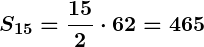 .
.Answer: The sum of the first 15 terms is  .
.
Example 2: The sum of the first 10 terms of an AP is  , and the first term is
  . Find the common difference.
Solution:
- Use the formula for the sum of the first terms:
. - Substitute the known values:
![\displaystyle\boldsymbol{220 = \frac \big[2(12) + (10 - 1)d\big]}](data:image/svg+xml,%3Csvg%20xmlns%3D%27http%3A%2F%2Fwww.w3.org%2F2000%2Fsvg%27%20width%3D%27292%27%20height%3D%2746%27%20viewBox%3D%270%200%20292%2046%27%3E%3Crect%20width%3D%27292%27%20height%3D%2746%27%20fill-opacity%3D%220%22%2F%3E%3C%2Fsvg%3E "Rendered by QuickLaTeX.com") .
. - Simplify the equation:

 .
. - Solve for :


 .
.
![\displaystyle\boldsymbol{220 = \frac \big[2(12) + (10 - 1)d\big]}](https://deekshalearning.com/wp-content/ql-cache/quicklatex.com-053ba0b0568ec6e2cdc39eaaf05a6f46_l3.png "Rendered by QuickLaTeX.com") .
.
 .
.


Answer: The common difference is  .
.
Example 3: Find the sum of all multiples of  between
  and
and  .
.
Solution:
- Form the AP:
The multiples of between
  and
and  are:
are:
 .
.
Here, ,
,  , and
, and  .
. - Find the number of terms ():
Use the formula for the nth term:
 .
.
Substituting , , and :


 .
. - Use the formula for the sum of the first terms:
 .
.
Substituting, , and :


 .
.
 .
. ,
,  , and
, and  .
. .
. ,
, 

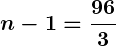
 .
.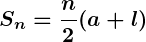 .
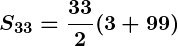
.
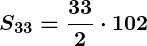
 .
.Answer: The sum of all multiples of between and is  .
.
Example 4: Find the sum of the first 22 terms of the AP:  .
.
Solution:
- Identify the values:
,  ,
,  .
. - Use the formula for the sum of terms:
- Substitute the values:
![\displaystyle\boldsymbol{S = \frac{22} \big[2(8) + (22 - 1)(-5)\big]}](data:image/svg+xml,%3Csvg%20xmlns%3D%27http%3A%2F%2Fwww.w3.org%2F2000%2Fsvg%27%20width%3D%27296%27%20height%3D%2746%27%20viewBox%3D%270%200%20296%2046%27%3E%3Crect%20width%3D%27296%27%20height%3D%2746%27%20fill-opacity%3D%220%22%2F%3E%3C%2Fsvg%3E "Rendered by QuickLaTeX.com")
- Simplify the expression:


 ,
,  ,
,  .
.![\displaystyle\boldsymbol{S = \frac{22} \big[2(8) + (22 - 1)(-5)\big]}](https://deekshalearning.com/wp-content/ql-cache/quicklatex.com-ce0ccbdbd1f5227a02bf7cf240f58cfd_l3.png "Rendered by QuickLaTeX.com")



Answer: 
Example 5: If the sum of the first 14 terms of an AP is  , and its first term is
  , find the 20th term.
Solution:
- Identify the values:
, , . - Use the formula for the sum of terms:
- Substitute the values for the 14th term sum:
![\displaystyle\boldsymbol{1050 = \frac{14} \big[2(10) + (14 - 1)d\big]}](data:image/svg+xml,%3Csvg%20xmlns%3D%27http%3A%2F%2Fwww.w3.org%2F2000%2Fsvg%27%20width%3D%27304%27%20height%3D%2746%27%20viewBox%3D%270%200%20304%2046%27%3E%3Crect%20width%3D%27304%27%20height%3D%2746%27%20fill-opacity%3D%220%22%2F%3E%3C%2Fsvg%3E "Rendered by QuickLaTeX.com")
- Simplify the equation:


- Find the 20th term using the nth term formula:


 ,
,  ,
,  .
.![\displaystyle\boldsymbol{1050 = \frac{14} \big[2(10) + (14 - 1)d\big]}](https://deekshalearning.com/wp-content/ql-cache/quicklatex.com-7d7d37b5ee6ccf413ba98ee37a899ee9_l3.png "Rendered by QuickLaTeX.com")






Answer: 
Example 6: Find the sum of the first 24 terms of the list of numbers whose nth term is given by  .
.
Solution:
- Expand the sequence:
 ,
,  , ,
, , 
- Identify the values:
,  , .
, . - Use the formula for the sum of terms:
- Substitute the values:
- Simplify the expression:


 ,
,  ,
,  ,
, 
 ,
,  ,
,  .
.![\displaystyle\boldsymbol{S_{24} = \frac{24} \big[2(5) + (24 - 1)(2)\big]}](https://deekshalearning.com/wp-content/ql-cache/quicklatex.com-30f80395322e44e50ae802b68b5db061_l3.png "Rendered by QuickLaTeX.com")


Answer: 
Example 7: A manufacturer produces 600 TV sets in the third year and 700 in the seventh year. Assuming production increases uniformly, find:
- The production in the first year,
- The production in the 10th year,
- The total production in the first 7 years.
Solution:
- Since production increases uniformly, it forms an AP. Let the first year production be and the common difference be .
From the data:

Subtract the first equation from the second:

Substitute into :

Answer: Production in the first year: .
. - Find the production in the 10th year:


Answer: Production in the 10th year:. - Find the total production in the first 7 years:
![\displaystyle\boldsymbol{S_7 = \frac \big[2a + (7 - 1)d\big]}](data:image/svg+xml,%3Csvg%20xmlns%3D%27http%3A%2F%2Fwww.w3.org%2F2000%2Fsvg%27%20width%3D%27227%27%20height%3D%2747%27%20viewBox%3D%270%200%20227%2047%27%3E%3Crect%20width%3D%27227%27%20height%3D%2747%27%20fill-opacity%3D%220%22%2F%3E%3C%2Fsvg%3E "Rendered by QuickLaTeX.com")
![\displaystyle\boldsymbol{S_7 = \frac \big[2(550) + 6(25)\big]}](data:image/svg+xml,%3Csvg%20xmlns%3D%27http%3A%2F%2Fwww.w3.org%2F2000%2Fsvg%27%20width%3D%27238%27%20height%3D%2747%27%20viewBox%3D%270%200%20238%2047%27%3E%3Crect%20width%3D%27238%27%20height%3D%2747%27%20fill-opacity%3D%220%22%2F%3E%3C%2Fsvg%3E "Rendered by QuickLaTeX.com")
![\displaystyle\boldsymbol{S_7 = \frac \big[1100 + 150\big]}](data:image/svg+xml,%3Csvg%20xmlns%3D%27http%3A%2F%2Fwww.w3.org%2F2000%2Fsvg%27%20width%3D%27201%27%20height%3D%2747%27%20viewBox%3D%270%200%20201%2047%27%3E%3Crect%20width%3D%27201%27%20height%3D%2747%27%20fill-opacity%3D%220%22%2F%3E%3C%2Fsvg%3E "Rendered by QuickLaTeX.com")





 into
into 
 .
.



![\displaystyle\boldsymbol{S_7 = \frac \big[2a + (7 - 1)d\big]}](https://deekshalearning.com/wp-content/ql-cache/quicklatex.com-081e2279771c1b49e377c276479fdffe_l3.png "Rendered by QuickLaTeX.com")
![\displaystyle\boldsymbol{S_7 = \frac \big[2(550) + 6(25)\big]}](https://deekshalearning.com/wp-content/ql-cache/quicklatex.com-e49730ee7275db581f2bde5e6e819381_l3.png "Rendered by QuickLaTeX.com")
![\displaystyle\boldsymbol{S_7 = \frac \big[1100 + 150\big]}](https://deekshalearning.com/wp-content/ql-cache/quicklatex.com-593483dfe83a398114dd6e1ee2fbbeac_l3.png "Rendered by QuickLaTeX.com")
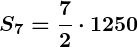
Answer: Total production in the first 7 years: 
Practice Problems
- Find the sum of the first
 terms of the AP
  .
.
Answer:. - The 8th term of an AP is
 , and the sum of the first terms is . Find the first term.
Answer:. - Find the sum of all two-digit numbers divisible by
 .
.
Answer:.
 terms of the AP
  .
. .
. , and the sum of the first
  terms is
  . Find the first term.
 .
. .
. .
.FAQs
The sum is derived by pairing terms of the sequence in reverse order, resulting in a simplified formula.
It helps in solving problems involving large sequences without manually adding all terms.
.










Get Social